
Overview
International Trade, Sanctions and Investigations in Canada
Trade and regulatory exposure for businesses dealing with Canada has grown sharply since 2025. This guide covers US tariffs, Canadian counter-tariffs and the CUSMA joint review, sanctions and export controls, foreign bribery and investigations, AML and FINTRAC duties, and forced labour reporting, with the penalties and compliance steps that matter most.
5In this section
- 01Tariffs, CUSMA and CustomsTariffs and customs now sit at the centre of cross-border strategy for businesses trading with Canada. This guide…
- 02Sanctions and Export ControlsSanctions and export controls in Canada combine asset freezes and dealing bans with permit requirements for sensitive goods…
- 03Anti-Corruption and Corporate InvestigationsAnti-corruption enforcement in Canada reaches foreign bribery, domestic corruption and the internal failures that allow them. This guide…
- 04AML and FINTRAC ComplianceFINTRAC compliance has become more demanding after 2026 amendments requiring anti-money laundering programmes to be reasonably designed, risk-based…
- 05Supply Chain and Forced Labour ComplianceForced labour risk in supply chains is now both a reporting obligation and a border issue in Canada.…
Key takeaways
- Canada imposed 15%, 25% and 50% counter-tariffs on CAD 27.6 billion of US goods from 8 September 2026.
- CUSMA stays in force until 2036; no 16-year extension was announced at the July 2026 joint review.
- SEMA deems an entity's property to be owned by any person who controls it, including at 50% ownership.
- FINTRAC penalties can now reach CAD 20 million per violation for entities after 2026 amendments.
- Forced labour reports are due by 31 May each year, with fines of up to CAD 250,000 for failures.
Trade and regulatory risk in Canada today
Trade and regulatory compliance has moved from the back office to the boardroom for businesses that trade with or through Canada. Since 2025, Canadian exporters and importers have faced successive rounds of United States tariffs, Canadian counter-tariffs and the first joint review of the Canada-United States-Mexico Agreement (CUSMA).
At the same time, Canada has broadened its sanctions regimes, strengthened its anti-money laundering framework, introduced mandatory reporting on forced labour in supply chains and kept foreign bribery firmly on the enforcement agenda. Each of these areas is governed by a separate federal statute and regulator, but in practice they overlap: the same shipment can raise tariff classification, origin, sanctions, export permit and forced labour questions at once.
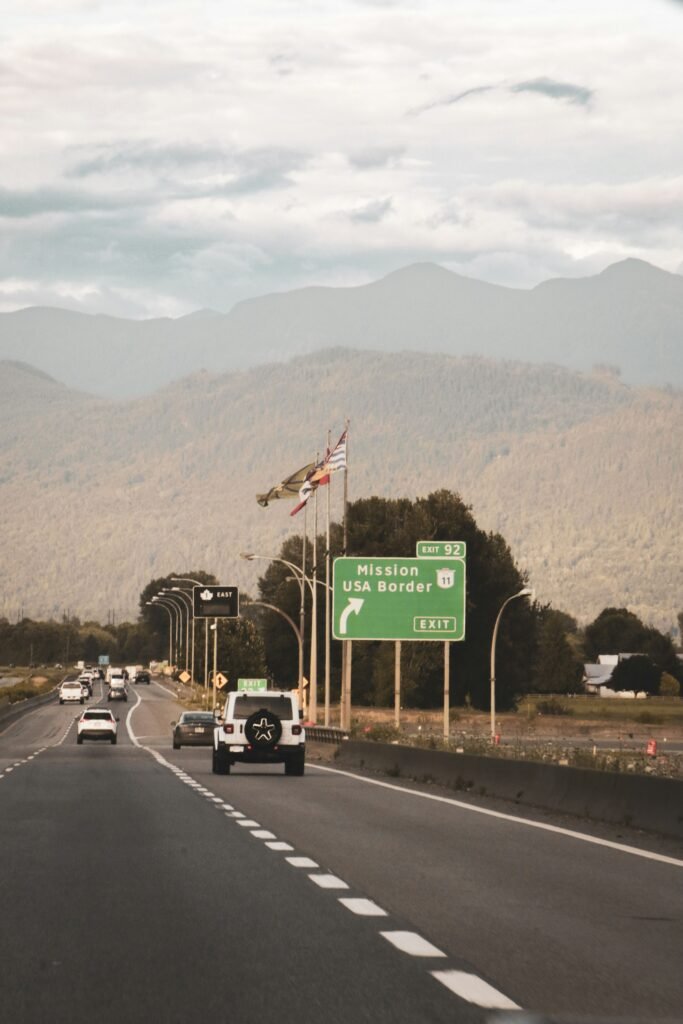
This guide gives an overview of the five areas covered by our trade and regulatory practice, explains the main obligations and penalties, and links to our detailed pages. Trade and regulatory matters in Canada are almost entirely federal, which gives businesses a single national rulebook in most areas, but provincial law still matters for corporate transparency, procurement and some consumer and securities issues. The position described here reflects primary sources available in November 2026; tariff measures in particular change frequently.
Three themes run through all five areas. First, enforcement agencies expect compliance programmes that are risk-based and documented, not just written policies. Second, liability reaches individuals: directors, officers and employees can face personal penalties under most of the statutes discussed below. Third, cross-border coordination is unavoidable, because the United States, the United Kingdom and the European Union operate parallel regimes that often apply to the same transaction.
Tariffs, CUSMA and customs
Canada's trade relationship with the United States has been under unusual strain. According to a Department of Finance release of August 2026, the United States imposed a 50% tariff on CAD 27.6 billion of Canadian goods effective 22 August 2026, and Canada responded with counter-tariffs of 15%, 25% and 50% on a matching value of US goods, effective 8 September 2026. Steel and aluminum products that previously faced a 25% Canadian counter-tariff now face 50%, existing counter-tariffs on US autos remain, and the tariff remission framework remains available for exceptional relief.
CUSMA itself remains in force. The first joint review was due on the sixth anniversary of entry into force, 1 July 2026. Global Affairs Canada describes the review as a scheduled check-in rather than an expiry date: the agreement stays in force until 2036, and if all three parties agree, its term is extended for another 16 years. No extension was announced after the trilateral meeting on 1 July 2026, and discussions continue.
At the border, the Canada Border Services Agency (CBSA) administers the Customs Act and Customs Tariff. Its CARM system became the official system for accounting for imports and paying duties on 21 October 2024, and the transition period allowing release before payment without security ended on 20 May 2025. Importers carry self-assessment obligations, including a duty under s. 32.2 of the Customs Act to correct an incorrect origin declaration within 90 days after having reason to believe it is wrong. Trade remedies under the Special Import Measures Act, such as anti-dumping and countervailing duties, add further exposure in sectors such as steel and softwood lumber.
Importers affected by counter-tariffs should also review duty relief and drawback programmes administered by the CBSA, which can reduce or recover duties on goods that are processed and re-exported, and consider whether a remission request is justified. Tariff exposure should be reflected in supply contracts, pricing clauses and customs valuation, which makes the issue as much commercial as regulatory.
Our tariffs, CUSMA and customs page explains rules of origin, classification and valuation, remission, CARM compliance and trade remedies in more detail.
Sanctions and export controls
Canada imposes autonomous sanctions under the Special Economic Measures Act (SEMA) and the Justice for Victims of Corrupt Foreign Officials Act (JVCFOA), and implements UN Security Council measures under the United Nations Act. SEMA regulations apply to countries including Russia, Belarus, Iran, North Korea, Myanmar and Venezuela, among others, and combine asset freezes on listed persons with sectoral prohibitions on goods, services and technology.
Two features of Canadian sanctions law are especially important for business. First, since 2023, s. 2.1 of SEMA deems property owned, held or controlled by an entity to be owned by any person who controls that entity, with control established by holding 50% or more of the shares or voting rights, the ability to change the board, or circumstances showing that the person can direct the entity's activities.
Second, regulations such as the Special Economic Measures (Russia) Regulations require every person in Canada and every Canadian abroad to disclose without delay to the RCMP or CSIS property they have reason to believe is owned or controlled by a listed person, and related transactions. Wilful contravention of SEMA is an offence punishable by up to one year's imprisonment and a CAD 25,000 fine on summary conviction, or up to five years on indictment.
Export controls are governed by the Export and Import Permits Act (EIPA). Goods and technology on the Export Control List, and exports to countries on the Area Control List, require permits. Brokering of items on the Brokering Control List also requires a permit. Contravening the EIPA can lead, on indictment, to a fine at the court's discretion and imprisonment for up to ten years. The Controlled Goods Program adds registration requirements for businesses that examine, possess or transfer controlled goods in Canada. See our sanctions and export controls page.
Anti-corruption and corporate investigations
The Corruption of Foreign Public Officials Act (CFPOA) makes it an offence to give or offer a benefit to a foreign public official to obtain or retain an advantage in the course of business, and separately prohibits books and records offences designed to bribe a foreign official or hide bribery. Both offences carry up to 14 years' imprisonment, and organizations face unlimited fines. Canadian citizens, permanent residents and Canadian-incorporated entities can be prosecuted for conduct anywhere in the world on the basis of nationality jurisdiction (s. 5). The former exception for facilitation payments was repealed and has not applied since 31 October 2017.
Domestic corruption, fraud and secret commissions are prosecuted under the Criminal Code, which also sets out how organizations become criminally liable through the conduct of their senior officers (s. 22.2). Part XXII.1 of the Criminal Code, added in 2018, allows prosecutors to negotiate remediation agreements, Canada's version of deferred prosecution agreements, with organizations accused of listed economic offences, subject to court approval. Whistleblower protections in the Criminal Code prohibit retaliation against employees who report offences to law enforcement (s. 425.1).
Internal investigations are the usual first response to an allegation. They raise questions about privilege, employee interviews, data collection across borders and self-reporting. Our anti-corruption and corporate investigations page covers these issues.
AML and FINTRAC compliance
The Proceeds of Crime (Money Laundering) and Terrorist Financing Act (PCMLTFA) applies to a long list of reporting entities: banks, credit unions, life insurers, securities dealers, money services businesses (including virtual currency dealers), casinos, real estate brokers and developers, accountants, dealers in precious metals and stones, and, since 1 April 2025, factoring, cheque-cashing and financing or leasing entities. Reporting entities must establish a compliance programme, know their clients, keep records and report suspicious transactions, large cash transactions of CAD 10,000 or more and other prescribed transactions to the Financial Transactions and Reports Analysis Centre of Canada (FINTRAC).
The regime was tightened again in 2026. The Strengthening Canada's Immigration System and Borders Act, which received royal assent on 26 March 2026, requires compliance programmes to be "reasonably designed, risk-based and effective", raises maximum administrative monetary penalties, introduces compliance orders and mandatory compliance agreements, and provides for universal enrolment of reporting entities with FINTRAC once regulations are made.
The statutory maximum for a single prescribed violation is now CAD 20 million for an entity, and the cap for all violations in one notice is the greater of CAD 20 million and 3% of the entity's gross global revenue. Since 1 October 2025, reporting entities must also report material discrepancies in beneficial ownership information to Corporations Canada. Our AML and FINTRAC compliance page explains the obligations sector by sector.
Screening is now a shared control. A single, well-maintained screening process can serve sanctions, export control, AML and forced-labour due diligence at the same time, provided it captures ownership and control information, not just names. Businesses that run separate, unconnected checks for each regime tend to miss the same red flags several times.
Supply chain and forced labour compliance
Two federal measures target forced labour. The Customs Tariff prohibits imports of goods mined, manufactured or produced wholly or in part by forced labour (tariff item 9897.00.00), enforced by the CBSA. And the Fighting Against Forced Labour and Child Labour in Supply Chains Act requires reporting entities to file an annual report with the Minister of Public Safety on or before 31 May, describing the steps taken in the previous financial year to prevent and reduce the risk of forced or child labour in their supply chains (s. 11).
An "entity" includes a corporation listed on a Canadian stock exchange and a business with a Canadian presence that meets at least two of three size tests: CAD 20 million in assets, CAD 40 million in revenue or an average of 250 employees. Reports must be approved by the governing body, signed and published on the entity's website, and failure to report can lead to fines of up to CAD 250,000. See our supply chain and forced labour compliance page.
Interprovincial trade and public procurement
Trade and regulatory issues are not only international. Internal trade barriers have long been a cost for businesses operating across provinces, and Parliament responded with the Free Trade and Labour Mobility in Canada Act, enacted as part of the One Canadian Economy Act (royal assent 26 June 2025). Since 1 January 2026, when the Act and its regulations came into force, goods, services and workers that meet provincial or territorial requirements are generally deemed to meet comparable federal requirements, subject to exceptions for matters such as health, safety, security and the environment. The federal government has also announced the removal of all its remaining exceptions under the Canadian Free Trade Agreement.
Public procurement is a further trade and regulatory concern. Federal, provincial and municipal purchasing is subject to trade agreement obligations, including CUSMA, CETA and the CPTPP for covered procurements, and to domestic rules on bid evaluation and supplier conduct. "Buy Canadian" policies and defence and security procurement rules add further conditions in sensitive sectors. Suppliers should check which agreements apply to a tender and what remedies exist if the process is unfair; our insights on interprovincial trade barriers and Buy Canadian procurement policies discuss these developments.
Enforcement trends and personal liability
Enforcement across these regimes is becoming more coordinated and more personal. Statutes increasingly reach directors and officers who direct, authorize or acquiesce in a contravention, and most offences can be prosecuted against both the organization and the individuals involved. Regulators are also sharing information more widely: FINTRAC, for example, now exchanges supervisory information with other members of the Financial Institutions Supervisory Committee, and Canadian sanctions and export control authorities cooperate closely with allied governments.
For boards, the practical consequences are clear. Directors should receive regular reporting on trade and regulatory risk, understand how the business would detect and respond to a potential breach, and ensure that compliance functions have the resources and independence to act. When a problem is found, early decisions about investigation, preservation of evidence, self-reporting and remediation often shape the outcome far more than later argument. Mergers and acquisitions also require attention: buyers should diligence a target's sanctions, export control, anti-corruption and AML history, because successor exposure and post-closing remediation costs can be significant.
Key trade and regulatory regimes compared
| Area | Main statute | Regulator or enforcer | Headline exposure |
|---|---|---|---|
| Tariffs and customs | Customs Act; Customs Tariff; Special Import Measures Act | CBSA; Department of Finance; CITT | Duties, re-assessments, penalties, seizure |
| Sanctions | SEMA; JVCFOA; United Nations Act | Global Affairs Canada; RCMP; CBSA | Up to 5 years' imprisonment on indictment (SEMA s. 8) |
| Export controls | Export and Import Permits Act | Global Affairs Canada; CBSA | Discretionary fine and up to 10 years on indictment (EIPA s. 19) |
| Foreign bribery | CFPOA | RCMP; Public Prosecution Service of Canada | Up to 14 years' imprisonment (ss. 3–4) |
| AML and terrorist financing | PCMLTFA | FINTRAC | AMPs up to CAD 20 million per violation for entities |
| Forced labour reporting | Fighting Against Forced Labour and Child Labour in Supply Chains Act | Public Safety Canada | Fines up to CAD 250,000 (s. 19) |
Building a trade and regulatory compliance programme
Effective trade and regulatory compliance starts with a clear picture of where the business is exposed. For most companies, that means mapping products, technologies, counterparties, jurisdictions and transaction flows, and then matching each to the regimes described above. A proportionate programme usually includes:
- Governance: board-level oversight, a named compliance officer and clear escalation routes.
- Risk assessment: a documented assessment updated when the business, its markets or the law change, such as when new sanctions are imposed or tariff measures shift.
- Screening and due diligence: ownership-based sanctions screening, export classification of goods and technology, supplier due diligence on forced labour risk and know-your-client checks where the PCMLTFA applies.
- Contracts: representations, audit rights, termination rights and cooperation clauses dealing with sanctions, export controls, anti-corruption and supply-chain standards.
- Training and testing: role-specific training and periodic independent testing; reporting entities under the PCMLTFA must have their programme reviewed every two years.
- Incident response: a playbook for possible breaches covering preservation, investigation, privilege, disclosure to authorities and remediation.
Illustration: a hypothetical Canadian manufacturer of industrial sensors sells through a distributor in Central Asia and sources components from several Asian suppliers. In one quarter it may need to classify its products for export control purposes, screen the distributor's owners against Russian sanctions lists, consider whether US tariffs and Canadian counter-tariffs change its pricing, assess forced labour risk in its component suppliers for its annual report and decide whether a commission paid to a sales agent raises CFPOA concerns. A single integrated compliance framework handles these trade and regulatory questions far more efficiently than five separate ones, and gives the board a single, coherent view of the risks it is overseeing.
How TRW & Co helps
We advise Canadian and international businesses, investors and financial institutions on trade and regulatory matters in Canada: tariff, origin and customs strategy; CUSMA and the 2026 joint review; sanctions and export control compliance and voluntary disclosures; anti-corruption programmes and internal investigations; PCMLTFA and FINTRAC compliance; and forced labour reporting and supply-chain due diligence. We work alongside licensed customs brokers and Canadian-licensed counsel where a filing, appearance or representation requires them. This page is general information, not legal advice. To discuss your exposure, please contact us.
Frequently asked questions
Which federal laws govern trade and regulatory compliance in Canada?
The main statutes are the Customs Act and Customs Tariff for imports, the Special Economic Measures Act, the Justice for Victims of Corrupt Foreign Officials Act and the United Nations Act for sanctions, the Export and Import Permits Act for export controls, the Corruption of Foreign Public Officials Act for foreign bribery, the PCMLTFA for AML, and the Fighting Against Forced Labour and Child Labour in Supply Chains Act.
Is CUSMA still in force after the 2026 joint review?
Yes. The first joint review took place on 1 July 2026. According to Global Affairs Canada, the review is a scheduled check-in, not an expiry date, and the agreement remains in force until 2036. The parties may agree to extend it for another 16 years; no extension was announced after the July 2026 meeting, and talks continue.
Do Canadian sanctions apply to companies owned by sanctioned persons?
Yes. Under s. 2.1 of SEMA, property owned, held or controlled by an entity is deemed to be owned by a person who controls it. Control exists where the person holds 50% or more of the shares or votes, can change the board, or can reasonably be concluded to direct the entity's activities, so screening must look through ownership chains.
Who must file a forced labour report in Canada?
Entities listed on a Canadian stock exchange, and businesses with a place of business, business or assets in Canada that meet two of three thresholds (CAD 20 million assets, CAD 40 million revenue, 250 employees) in one of their two most recent financial years, must report by 31 May. Certain government institutions also report.
What changed for FINTRAC compliance in 2026?
Amendments that received royal assent on 26 March 2026 require compliance programmes to be reasonably designed, risk-based and effective, raise maximum administrative monetary penalties, introduce compliance orders and mandatory compliance agreements, and provide for universal enrolment with FINTRAC once regulations are made.
Sources
- Global Affairs Canada: Joint Review of CUSMA
- Special Economic Measures Act (S.C. 1992, c. 17)
- Corruption of Foreign Public Officials Act (S.C. 1998, c. 34)
- Proceeds of Crime (Money Laundering) and Terrorist Financing Act (S.C. 2000, c. 17)
- FINTRAC: Modernization and upcoming changes impacting reporting entities
- Fighting Against Forced Labour and Child Labour in Supply Chains Act (S.C. 2023, c. 9)
General information only, not legal advice. References to statutes, courts and authorities describe published law and practice at the date shown.