
Guide · Sectors
Infrastructure and Transportation
Infrastructure and transport businesses in Canada operate under federal regulation for airlines, interprovincial rail and shipping and provincial control of roads, transit and most public infrastructure. This sector guide covers aviation, rail, ports, trucking, P3s, investment and ownership rules, labour relations, safety and the 2025 Building Canada Act.
Key takeaways
- Non-Canadians may hold up to 49% of the voting interests in a Canadian airline, with 25% caps.
- Federally regulated transport employers cannot use replacement workers during lawful strikes since June 2025.
- Major ports are run by port authorities under the Canada Marine Act.
- Transportation mergers can trigger a public interest review by the Minister of Transport.
- The Building Canada Act allows national-interest transportation projects to be listed for faster approvals.
Infrastructure and transport in Canada: who regulates what
Infrastructure and transport businesses in Canada work across a divided constitutional landscape. Interprovincial and international transportation, including airlines, railways that cross provincial borders, shipping and interprovincial trucking, is federally regulated under statutes such as the Canada Transportation Act, the Railway Safety Act, the Canada Marine Act, the Canada Shipping Act, 2001 and the Aeronautics Act. Transport Canada sets safety rules and the Canadian Transportation Agency (CTA) acts as an economic regulator and tribunal. Roads, local transit, short-line railways within one province and most public infrastructure are provincial or municipal responsibilities, delivered by government agencies and, often, through public-private partnerships.
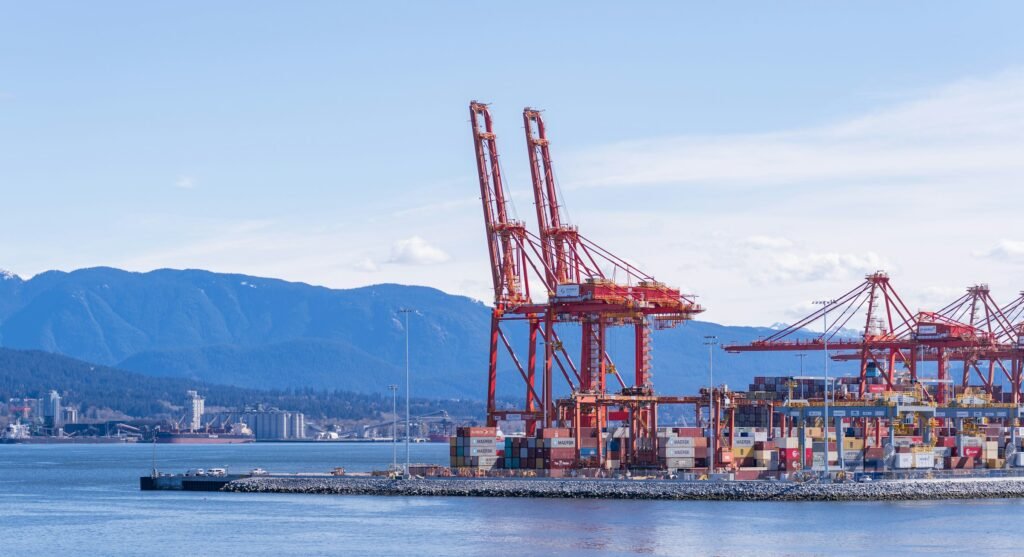
This sector page explains the legal issues facing operators, investors, lenders and contractors in rail, ports, airports, aviation, trucking, shipping and public infrastructure, and links to our pages on infrastructure, P3 and procurement and project and infrastructure finance.
| Mode or asset | Main regulators | Typical legal issues |
|---|---|---|
| Airlines and aviation | Transport Canada, CTA | Licensing, Canadian ownership limits, passenger protection, safety |
| Railways | Transport Canada, CTA (federal); provinces for intra-provincial lines | Safety, level of service, rates and interswitching, labour disruptions |
| Ports and marine | Port authorities under the Canada Marine Act, Transport Canada | Port leases and terminal concessions, marine safety, pilotage |
| Airports | Airport authorities under ground leases; Transport Canada | Ground lease obligations, concessions, development |
| Trucking | Provinces; federal hours-of-service rules for extra-provincial carriers | Licensing, safety ratings, worker classification |
| Public infrastructure | Provincial agencies, municipalities, Canada Infrastructure Bank | Procurement, P3 risk allocation, financing |
Aviation and airlines
Air carriers need a licence from the CTA to operate domestic and international services, and safety certification from Transport Canada. Canadian air carriers must be "Canadian" within the meaning of the Canada Transportation Act: non-Canadians may together hold up to 49% of the voting interests, with limits of 25% for any single non-Canadian and for foreign airlines in aggregate, and the carrier must be controlled in fact by Canadians. These ownership rules shape investment in Canadian airlines and require careful structuring of shareholder rights.
The Air Passenger Protection Regulations set minimum obligations to passengers for delays, cancellations, denied boarding and baggage, enforced by the CTA, and have been amended to strengthen passenger rights. Airlines also deal with security, accessibility, language and privacy obligations. Airports are generally operated by not-for-profit airport authorities under long-term ground leases from the federal government, which constrain development and require reinvestment.
Railways
Federally regulated railways are subject to safety regulation under the Railway Safety Act and economic regulation under the Canada Transportation Act, including level-of-service obligations to shippers, rules on rates for regulated grain, and interswitching. Shippers can bring level-of-service complaints and request final offer arbitration. Railway labour disputes have repeatedly disrupted supply chains, and federal intervention through the Canada Labour Code has been used to end work stoppages. Since 20 June 2025, the Code prohibits the use of replacement workers during lawful strikes and lockouts at federally regulated employers, with fines of up to CAD 100,000 per day.
Intra-provincial railways and transit systems are regulated provincially. Major transit projects, such as light rail lines, are often delivered through P3 models with long-term maintenance obligations.
Ports, marine and shipping
Canada's major ports are operated by port authorities established under the Canada Marine Act, which lease terminals to private operators. Terminal concessions, development projects and land use within port lands raise distinctive issues because port authorities have limited borrowing powers and federal approval requirements. Marine shipping is regulated under the Canada Shipping Act, 2001 and related statutes covering safety, pollution, pilotage and liability. Coasting trade rules restrict domestic shipping to Canadian-registered vessels unless a licence is obtained. Ports are central to trade diversification strategies, including for LNG and critical minerals exports. Port authority land use plans, environmental reviews and Indigenous consultation shape expansion projects, and terminal operators should negotiate lease terms that support long-term investment, including renewal rights and compensation if the authority redevelops the site.
Trucking and logistics
Trucking is regulated mainly by the provinces, which license carriers, set safety rules and enforce weights and dimensions, while federal rules apply to hours of service and electronic logging devices for extra-provincial carriers. Worker classification is a significant legal issue: governments have targeted the misclassification of drivers as independent contractors, and federally regulated trucking companies are subject to the Canada Labour Code. Logistics and warehousing businesses face employment standards, health and safety and, increasingly, customs and trade compliance obligations arising from tariffs. Our tariffs, CUSMA and customs page explains trade measures.
Public infrastructure and P3s
Canada has a mature public-private partnership market for hospitals, transit, highways, bridges and water. Provincial agencies procure projects under design-build-finance-maintain and similar models, in which a project company takes on design, construction, financing and long-term maintenance risk in exchange for availability payments. Procurement law, including the "Contract A" tendering principles from Tercon Contractors Ltd. v. British Columbia (Transportation and Highways), 2010 SCC 4, and trade agreement rules govern the process. The federal Canada Infrastructure Bank, under the Canada Infrastructure Bank Act, invests in revenue-generating infrastructure in the public interest. Our infrastructure, P3 and procurement page covers these structures.
National-interest projects
The One Canadian Economy Act, which received royal assent on 26 June 2025, enacted the Building Canada Act, under which national-interest projects can be listed so that certain federal authorizations are deemed favourable. In June 2026, the government began the process of listing transportation projects including the Mackenzie Valley Highway and the Grays Bay Road and Port. The Major Projects Office coordinates federal reviews for such projects.
Investing in infrastructure and transport
Pension plans, infrastructure funds and strategic investors are major owners of Canadian infrastructure and transport assets. Transactions require attention to sector-specific approvals and ownership rules, such as airline ownership limits, and to the Investment Canada Act, under which critical infrastructure attracts national security attention regardless of investment size. Transportation mergers that require Competition Act notification may also trigger a public interest review by the Minister of Transport under the Canada Transportation Act, which can lead to conditions. Our merger review and Investment Canada Act pages explain the processes.
For any transportation acquisition, check early whether the deal triggers the Canada Transportation Act public interest process in addition to Competition Act review. The Minister of Transport's process has its own timelines and can impose undertakings, so the purchase agreement's outside date and regulatory covenants should account for both.
Labour relations in transportation
Transportation is heavily unionized and largely federally regulated, so labour relations under the Canada Labour Code are a major source of business risk. Work stoppages at railways, ports and airlines have prompted government intervention, including referrals to the Canada Industrial Relations Board. The 2025 ban on replacement workers in federally regulated workplaces changes the dynamics of strikes and lockouts. Employers should plan contingency arrangements well in advance, maintain essential services where required and manage communications with customers and governments throughout a dispute. Our labour relations page explains the rules.
Safety, environment and liability
Safety regulation is central to every transportation mode. Rail, air and marine operators must maintain safety management systems, report incidents and comply with Transport Canada inspections and orders. Transportation of dangerous goods is regulated under its own federal statute and regulations, with requirements for classification, documentation, training and emergency response plans. Railways must hold minimum liability insurance for the carriage of crude oil and other dangerous goods. Environmental obligations include emissions standards, spill response and contaminated land at ports, rail yards and airports. Directors and officers can face personal exposure for safety and environmental offences, so boards should receive regular safety reporting.
Accessibility and passenger obligations
Federally regulated transportation providers must also comply with accessibility obligations under the Accessible Canada Act and the CTA's accessible transportation regulations, which cover services, equipment, communications and training for persons with disabilities. Official languages obligations apply to some carriers and airports. Complaints are handled by the CTA, which can order corrective measures and compensation. Operators should integrate these obligations into fleet procurement and customer service processes, because retrofits and service changes take time.
Contracts and disputes
Transportation contracts include carriage contracts, terminal services agreements, airport and port leases, concession agreements, rolling stock and aircraft leases, and long-term maintenance contracts. Limitation of liability rules for carriage are often set by statute or international convention, such as the Montreal Convention for international air carriage. Infrastructure disputes involve delay and disruption claims, performance deductions under P3 agreements and procurement challenges. Shipper disputes with railways can go to the CTA. Our construction and infrastructure disputes page covers project disputes.
Aircraft and equipment finance
Canada has implemented the Cape Town Convention and its Aircraft Protocol, which provide an international registry and enforcement remedies for interests in aircraft objects, supporting aircraft financing and leasing. Rail cars and other equipment are financed through leases and security under provincial personal property security legislation, and in Quebec through hypothecs and instalment sales.
Urban transit and municipal infrastructure
Urban transit is one of the largest areas of infrastructure and transport investment in Canada. Provinces and municipalities deliver subway, light rail and bus rapid transit projects, often with federal funding, through P3s, alliance contracts or progressive design-build models. Transit projects raise land acquisition and expropriation issues, utility relocation, third-party agreements with railways and municipalities, and complex interfaces between civil works and systems contracts. Provinces have enacted legislation to accelerate priority transit projects, including by streamlining expropriation and utility relocation. Contractors and investors should review how these statutes allocate responsibility for delays caused by third parties.
Water, broadband and other networks
Water and wastewater systems are mainly municipal, regulated by provincial drinking water and environmental statutes, and increasingly delivered through long-term operation and maintenance contracts. Broadband networks are federally regulated as telecommunications under the CRTC's jurisdiction, but deployment depends on municipal rights-of-way and support structures; in Telus Communications Inc. v. Federation of Canadian Municipalities, 2025 SCC 15, the Supreme Court held that the CRTC cannot grant carriers access to public places for 5G small cells. Electricity transmission is provincially regulated. Each network type has its own rate, access and ownership rules that investors must understand.
Northern and Indigenous infrastructure
Infrastructure in the North and in Indigenous communities raises distinctive issues. Modern land claim agreements create their own environmental review processes, land ownership regimes and benefit agreement requirements. Projects such as all-season roads, ports and power lines can transform access to resources and markets, which is why the Mackenzie Valley Highway and the Grays Bay Road and Port are among the projects the government began listing under the Building Canada Act in 2026. Indigenous ownership and partnership in infrastructure are increasingly common, supported by federal investment and loan guarantees. Our Indigenous law page explains the framework.
Tolling and user fees
Some infrastructure is funded by user fees, such as toll highways, bridges and airport improvement fees. Tolling requires statutory authority, and long-term concessions, such as Ontario's Highway 407, show how toll-setting and concession terms can generate disputes and political debate. Investors in user-fee assets should review the concession's rate-setting rules, the government's step-in and termination rights and the treatment of changes in law.
Trends shaping the sector
- Trade diversification: investment in ports, rail corridors and northern infrastructure to reach new markets.
- Supply chain resilience: government focus on preventing disruptions at ports and railways.
- Decarbonization: zero-emission vehicle requirements, low-carbon fuels and electrification of transit and ports.
- Faster approvals: the Building Canada Act and Major Projects Office for national-interest projects.
- Passenger rights: strengthened air passenger protection and enforcement.
Infrastructure and transport due diligence
Acquiring or financing infrastructure and transport assets requires diligence tailored to the asset. For concessions and P3 project companies, the key documents are the project agreement, the construction and maintenance subcontracts, the credit agreement and the direct agreements with lenders, and the questions focus on performance deductions, termination compensation, change in law and refinancing gain sharing. For operating businesses such as airlines, terminals and logistics companies, diligence covers licences and permits, ownership restrictions, collective agreements, safety records, environmental liabilities, customer contracts and trade exposure.
- Confirm that licences, certificates and leases can be transferred or survive a change of control.
- Review consent rights of governments, port and airport authorities, and lenders.
- Assess labour relations history and the timing of collective agreement renewals.
- Check safety and environmental compliance, including contaminated land at yards and terminals.
- Model the effect of tariffs, fuel prices and carbon pricing on revenues and costs.
- Identify whether foreign investment or Canada Transportation Act public interest review applies.
Lenders to infrastructure and transport projects focus on the robustness of revenue streams, whether availability payments, regulated tariffs or user fees, and on the protections available if the public counterparty terminates or changes the rules.
How TRW & Co helps
We advise operators, investors, lenders, contractors and public bodies in infrastructure and transport. Our work covers acquisitions and joint ventures, ownership and licensing questions, P3 bids and project agreements, concessions and leases, financing, regulatory proceedings before the CTA and other bodies, labour relations planning and disputes. We coordinate with counsel licensed in the relevant province and with technical advisers where needed. See also our sectors hub. This page is general information, not legal advice. To discuss a project or transaction, contact us.
Frequently asked questions
Can foreign investors own a Canadian airline?
Yes, within limits. Under the Canada Transportation Act, non-Canadians may together hold up to 49% of the voting interests in a Canadian air carrier, no single non-Canadian may hold more than 25%, foreign airlines together are capped at 25%, and the carrier must be controlled in fact by Canadians.
Who regulates railways in Canada?
Railways that cross provincial or national borders are federally regulated: Transport Canada handles safety under the Railway Safety Act and the Canadian Transportation Agency handles economic matters such as level of service and interswitching. Railways within one province are provincially regulated.
Are Canadian ports privately owned?
Major ports are operated by port authorities established under the Canada Marine Act, which typically lease terminals to private operators under long-term arrangements. Port authorities have limited borrowing powers, so terminal development often relies on private investment by terminal operators.
Do transportation mergers need special approval?
Often. Transactions involving transportation undertakings that require Competition Act notification may also be subject to a public interest review by the Minister of Transport under the Canada Transportation Act, which can result in conditions. Airline ownership limits and foreign investment review may also apply.
Sources
General information only, not legal advice. References to statutes, courts and authorities describe published law and practice at the date shown.