
Guide · Disputes and Litigation
International Arbitration in Canada: Seats, Set-Aside and Enforcement
Canada is a dependable place to arbitrate and to enforce awards. Every province has adopted the UNCITRAL Model Law for international commercial arbitration, courts apply the New York Convention, and judicial intervention is limited. This page explains the statutes, choosing a Canadian seat, set-aside and enforcement, domestic arbitration appeals, investor-state disputes and how to draft an effective clause.
Key takeaways
- Ontario's International Commercial Arbitration Act, 2017 gives the Model Law and the New York Convention force of law in Ontario.
- Applications to set aside an international award must be made within three months of receipt (Model Law, art. 34(3)).
- In Ontario, enforcement applications must be brought within ten years of the award or the end of set-aside proceedings.
- Domestic awards under Ontario's Arbitration Act, 1991 can be appealed on law with leave, and challenges must start within 30 days.
- Under CUSMA, US investors no longer have investor-state arbitration against Canada, apart from a legacy transition period.
Why choose Canada for international arbitration
Canada offers a stable legal framework for international arbitration. Every province and territory has legislation adopting the UNCITRAL Model Law on International Commercial Arbitration for international disputes, and Canada applies the 1958 New York Convention on the Recognition and Enforcement of Foreign Arbitral Awards. Courts respect party autonomy, intervene only on the limited grounds the Model Law allows, and are experienced in commercial matters. Canada is bilingual and bijural, so parties can arbitrate in English or French and under common-law or civil-law systems, and Montréal offers a civil-law seat with ready access to both traditions.
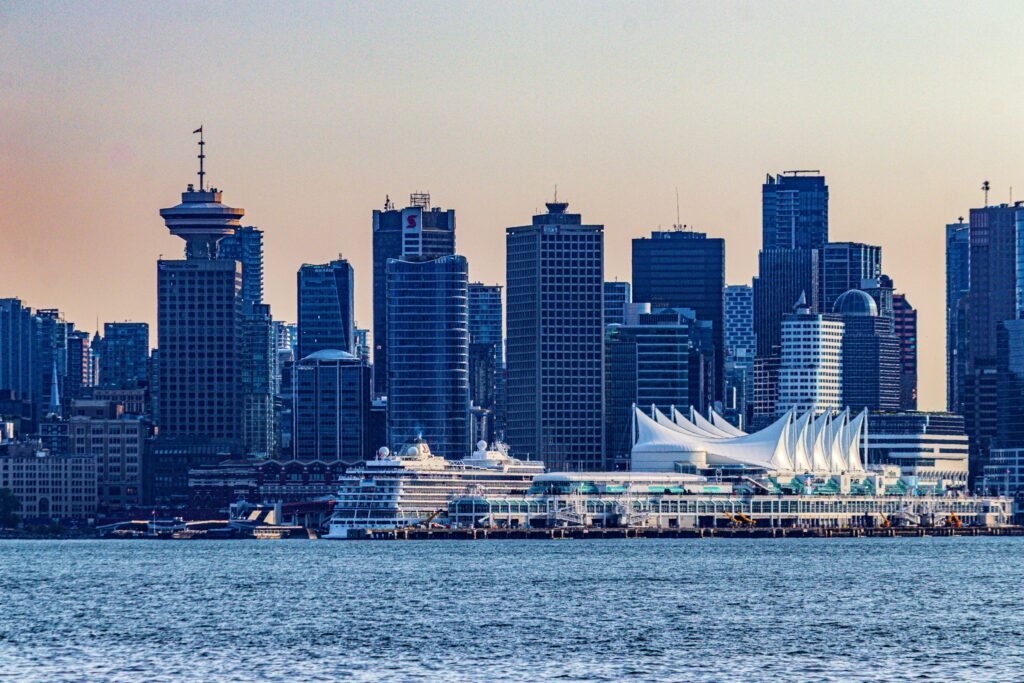
The most frequently chosen seats are Toronto, Montréal, Vancouver and Calgary. Each has hearing facilities, experienced arbitrators and counsel, and courts familiar with arbitration applications. Major international and Canadian arbitral institutions administer cases seated in Canada, and parties can also choose ad hoc arbitration under the UNCITRAL Arbitration Rules. For energy, mining, infrastructure, technology and cross-border supply disputes, a Canadian seat is often a neutral choice between North American, European and Asian parties.
The federal government has its own statute. The Commercial Arbitration Act gives the Commercial Arbitration Code, based on the Model Law, force of law in Canada, but only for matters where at least one party is the federal Crown, a departmental corporation or a Crown corporation, or for maritime or admiralty matters (s. 5(2)). Most commercial international arbitration in Canada is therefore governed by provincial law at the seat.
Choosing between a Canadian and a foreign seat
The seat should be chosen for legal reasons, not only convenience. A Canadian seat makes sense where the counterparty and its assets are in Canada, where Canadian law governs the contract, or where the parties want a neutral North American venue with Model Law courts. A foreign seat may be preferable where the counterparty's assets are elsewhere and local courts at that seat have a strong enforcement record, or where a trading relationship already uses a particular institution.
Hearings can take place anywhere regardless of the seat, so the choice is really about which courts will supervise the arbitration and which set-aside regime will apply. For international arbitration involving Canadian public bodies or Crown corporations, the federal Commercial Arbitration Act or provincial public-sector rules may also be relevant.
The legal framework for international arbitration
Ontario's International Commercial Arbitration Act, 2017 (ICAA) illustrates the approach. Schedule 1 reproduces the New York Convention and Schedule 2 the Model Law, each with force of law in Ontario, subject to the Act. Applications for recognition and enforcement under the Convention are made to the Superior Court of Justice (s. 3). If a tribunal rules as a preliminary question that it has jurisdiction, a party may apply to the Superior Court to decide the matter under art. 16(3) of the Model Law; under s. 11, where the tribunal rules that it lacks jurisdiction, any party may also apply to the court, and the court's decision is not subject to appeal.
British Columbia, Alberta and the other common-law provinces have comparable international commercial arbitration statutes, and Quebec's Code of Civil Procedure contains arbitration rules inspired by the Model Law that apply to both domestic and international cases.
Under the Model Law, courts may not intervene except where the law provides (art. 5). They refer parties to arbitration when an action is brought in a matter subject to an arbitration agreement, unless the agreement is null and void, inoperative or incapable of being performed (art. 8). Tribunals can rule on their own jurisdiction (art. 16) and order interim measures, which courts can enforce. Courts can also assist with the taking of evidence.
| Issue | International arbitration (Ontario ICAA / Model Law) | Domestic arbitration (Ontario Arbitration Act, 1991) |
|---|---|---|
| Appeal on the merits | None; set-aside only (art. 34) | On law, with leave, if the agreement is silent; broader if the agreement provides (s. 45) |
| Time to challenge | 3 months from receipt of the award (art. 34(3)) | 30 days after receipt (s. 47) |
| Court intervention | Only where the Model Law provides (art. 5) | Only for listed purposes (s. 6) |
| Enforcement limitation | Later of 31 December 2018 and 10 years after the award or end of set-aside proceedings (s. 10) | General limitations rules |
Running the arbitration
Within the framework of the Model Law, the parties shape the procedure. They agree on, or the tribunal decides, the timetable, the exchange of written submissions, document production and witness evidence. Canadian practice in international arbitration is often a hybrid: more limited document production than in Canadian court litigation, written witness statements and expert reports, and a focused hearing with cross-examination.
A plea that the tribunal lacks jurisdiction must be raised no later than the statement of defence (art. 16(2)), and a plea that the tribunal is exceeding its authority must be raised as soon as the matter arises. Tribunals can order interim measures to preserve assets or evidence, and under art. 17 H of the Model Law as adopted in Ontario, an interim measure issued by a tribunal is recognized as binding and enforced on application to the competent court, irrespective of the country in which it was issued, subject to limited exceptions. Canadian courts can also grant interim relief in support of arbitration, including in arbitrations seated elsewhere in appropriate cases.
Costs in international arbitration are usually allocated by the tribunal, often following the result, and include the arbitrators' fees and administrative costs as well as legal fees. Parties should budget for the tribunal's fees and any advance on costs required by the institution at the outset, and consider whether security for costs or third-party funding will be in issue.
Setting aside awards
An application to set aside is the exclusive recourse against an international award made in Canada (Model Law, art. 34(1)).
The grounds are narrow: incapacity of a party or invalidity of the arbitration agreement; lack of proper notice or inability to present one's case; an award dealing with matters beyond the submission to arbitration; a tribunal composition or procedure not in accordance with the parties' agreement or the Model Law; non-arbitrability of the subject matter; and conflict with public policy. The application must be made within three months from the date the applicant received the award, or from the disposal of a request for correction or interpretation. Courts retain discretion to refuse to set aside an award even where a ground is made out, if the defect did not affect the result.
Canadian courts have consistently stated that set-aside is not an appeal in disguise. Arguments that the tribunal misinterpreted the contract or misapplied the law will not succeed unless they can be framed within a Model Law ground, such as excess of jurisdiction, and courts look closely at attempts to recast merits complaints as jurisdictional ones.
Raise objections to the tribunal's jurisdiction or procedure promptly during the arbitration. A party that proceeds without objecting, knowing of a departure from the agreement or the Model Law, may be treated as having waived its right to object later (Model Law, art. 4), which can remove a set-aside ground.
Enforcing awards in Canada
Foreign and Canadian international awards are recognized and enforced on application to the competent court, typically the superior court of the province where enforcement is sought. Under art. 36 of the Model Law and art. V of the Convention, recognition or enforcement may be refused only on grounds that mirror the set-aside grounds, including that the award has been set aside or suspended by a court of the seat, and on public policy grounds. The applicant must supply the original award or a certified copy and the arbitration agreement, with translations where required.
Limitation periods matter. Ontario's ICAA provides that no application for recognition or enforcement may be made after the later of 31 December 2018 and the tenth anniversary of the date the award was made or, if set-aside proceedings were commenced at the seat, the date those proceedings concluded (s. 10). Other provinces apply their own limitations rules, which may be shorter, so award creditors should act promptly and check the law of each province where assets are located.
Once recognized, an award is enforced like a judgment of the court, using garnishment, seizure and sale of assets and other execution tools. Sovereign award debtors raise additional issues of state immunity under the State Immunity Act, which distinguishes between immunity from jurisdiction and immunity from execution against particular assets.
Illustration (hypothetical): a German equipment supplier obtains an ICC award seated in Paris against a Canadian mining company for CAD 30 million. It applies to the Ontario Superior Court for recognition, filing the award and the arbitration agreement. The mining company argues that the tribunal misread the warranty clause. That is not a Convention ground, and the court recognizes the award. Because the company's assets are mainly in British Columbia and Quebec, the supplier then takes steps there, within the limitation periods of each province.
Domestic arbitration and standard-form contracts
Domestic arbitrations, between Canadian parties without an international element, are governed by provincial arbitration acts that allow more court involvement. Under Ontario's Arbitration Act, 1991, if the arbitration agreement does not deal with appeals on questions of law, a party may appeal on a question of law with leave, which the court grants only if the importance of the matters at stake justifies an appeal and the determination of the question will significantly affect the parties' rights (s. 45(1)).
The agreement may provide for appeals on law, fact or mixed fact and law, or exclude them. Appeals and set-aside applications must be commenced within 30 days after receipt of the award (s. 47). Parties who want finality should exclude appeals expressly.
Where an appeal lies, appellate standards of review apply. The Supreme Court's decision in Wastech Services Ltd. v. Greater Vancouver Sewerage and Drainage District, 2021 SCC 7, which arose from an appeal of a commercial arbitration award, illustrates how courts review contractual interpretation from arbitral decisions.
Arbitration clauses in standard-form and consumer contracts face additional scrutiny. In Uber Technologies Inc. v. Heller, 2020 SCC 16, the Supreme Court held that an arbitration clause requiring drivers to arbitrate in the Netherlands, with substantial up-front fees, was unconscionable and invalid. Consumer protection statutes in several provinces also limit the enforceability of arbitration clauses against consumers. International arbitration clauses in business-to-business contracts between sophisticated parties are generally enforced.
Arbitration and insolvency, class proceedings and regulators
Arbitration agreements interact with other Canadian proceedings. Where a party is in CCAA or bankruptcy proceedings, the stay of proceedings generally extends to arbitrations, and the supervising court may decide whether an arbitration can continue. Regulatory matters, such as competition, securities enforcement or tax assessments, are not arbitrable as between a party and the regulator. And in consumer matters, provincial statutes and the courts' approach in Uber mean that arbitration clauses may not prevent class proceedings. Parties should consider these limits when relying on arbitration as the only route to resolve a dispute.
Investor-state arbitration and clause drafting
Investor-state disputes
Investors can bring treaty claims against host states under investment treaties and trade agreements. According to Global Affairs Canada, CUSMA does not contain a trilateral investor-state mechanism: apart from a transition period for investments made before CUSMA entered into force, US investors cannot bring investor-state claims against Canada, and the remaining option is state-to-state dispute settlement. Canada's other trade agreements and investment protection agreements contain their own mechanisms. Investors structuring a Canadian or foreign investment should check which treaty, if any, protects them, because nationality planning must be done before a dispute arises.
Drafting an effective clause
Most problems in international arbitration begin with the clause. A well-drafted clause should:
- name the seat (the legal place of arbitration), which determines the supervising courts and the set-aside regime;
- choose institutional rules or ad hoc arbitration, and the appointing authority;
- specify the number of arbitrators, the language and the governing law of the contract and of the arbitration agreement;
- address interim relief, emergency arbitrators and the parties' ability to seek court assistance;
- deal with confidentiality, which is not automatic in every Canadian jurisdiction;
- provide for joinder and consolidation where several related contracts or parties are involved; and
- for domestic arbitrations, state whether appeals on questions of law, fact or mixed fact and law are excluded or permitted.
Multi-tier clauses requiring negotiation or mediation before arbitration should set clear time limits, so that a party is not left arguing about whether preconditions were met.
How TRW & Co helps
We advise companies and investors on international arbitration involving Canada. We draft and review arbitration clauses and multi-tier dispute resolution provisions, assess the choice of a Canadian seat, advise on investment treaty protection and structuring, support parties through arbitral proceedings, and plan set-aside, recognition and enforcement steps in Canadian courts. Court applications in Canada require Canadian-licensed counsel, and we work alongside counsel of record. This page is general information rather than advice on any dispute. To discuss an arbitration clause or award, contact us, or see our disputes overview, our commercial litigation page and our insight on investor-state arbitration.
Frequently asked questions
Are foreign arbitral awards enforceable in Canada?
Yes. Canada applies the New York Convention, and every province has adopted the UNCITRAL Model Law. A court may refuse recognition only on the limited Convention and Model Law grounds, such as invalidity of the agreement, lack of notice, excess of jurisdiction, an award set aside at the seat, or public policy. Provincial limitation periods apply.
How long do I have to challenge an international award made in Canada?
Under art. 34(3) of the Model Law, an application to set aside must be made within three months from the date the applicant received the award, or from the disposal of a request for correction or interpretation. The grounds are narrow and do not include errors of fact or law on the merits.
Can a domestic arbitration award be appealed in Ontario?
Under s. 45 of Ontario's Arbitration Act, 1991, if the arbitration agreement does not address appeals, a party may appeal on a question of law with leave. The agreement can allow broader appeals or exclude them. Appeals and set-aside applications must be commenced within 30 days after receiving the award.
Which Canadian cities are used as arbitration seats?
Toronto, Montréal, Vancouver and Calgary are the most frequently chosen. Each has courts experienced in arbitration matters and a Model Law framework for international cases. Montréal offers a civil-law seat with bilingual practice.
Can US investors bring investor-state claims against Canada under CUSMA?
Generally no. According to Global Affairs Canada, CUSMA has no trilateral investor-state mechanism, and apart from a transition period for investments made before it entered into force, US investors cannot bring such claims against Canada. State-to-state dispute settlement remains available but does not award damages to investors.
Sources
General information only, not legal advice. References to statutes, courts and authorities describe published law and practice at the date shown.