
Hydro-Québec Calls for Tenders and Quebec's Energy Plan
Hydro Quebec calls for tenders remain the main gateway for new wind and solar supply in Quebec, but the 2025 energy governance law changed the rules around them. Here is how procurement now works, what the 2025 solar and 2026 wind calls require, and how large new loads are authorized.
Key takeaways
- Bill 69 (S.Q. 2025, c. 24) removed the general obligation to procure new supply by call for tenders.
- Contracts won through fair, impartial public calls for renewable power need no Régie authorization.
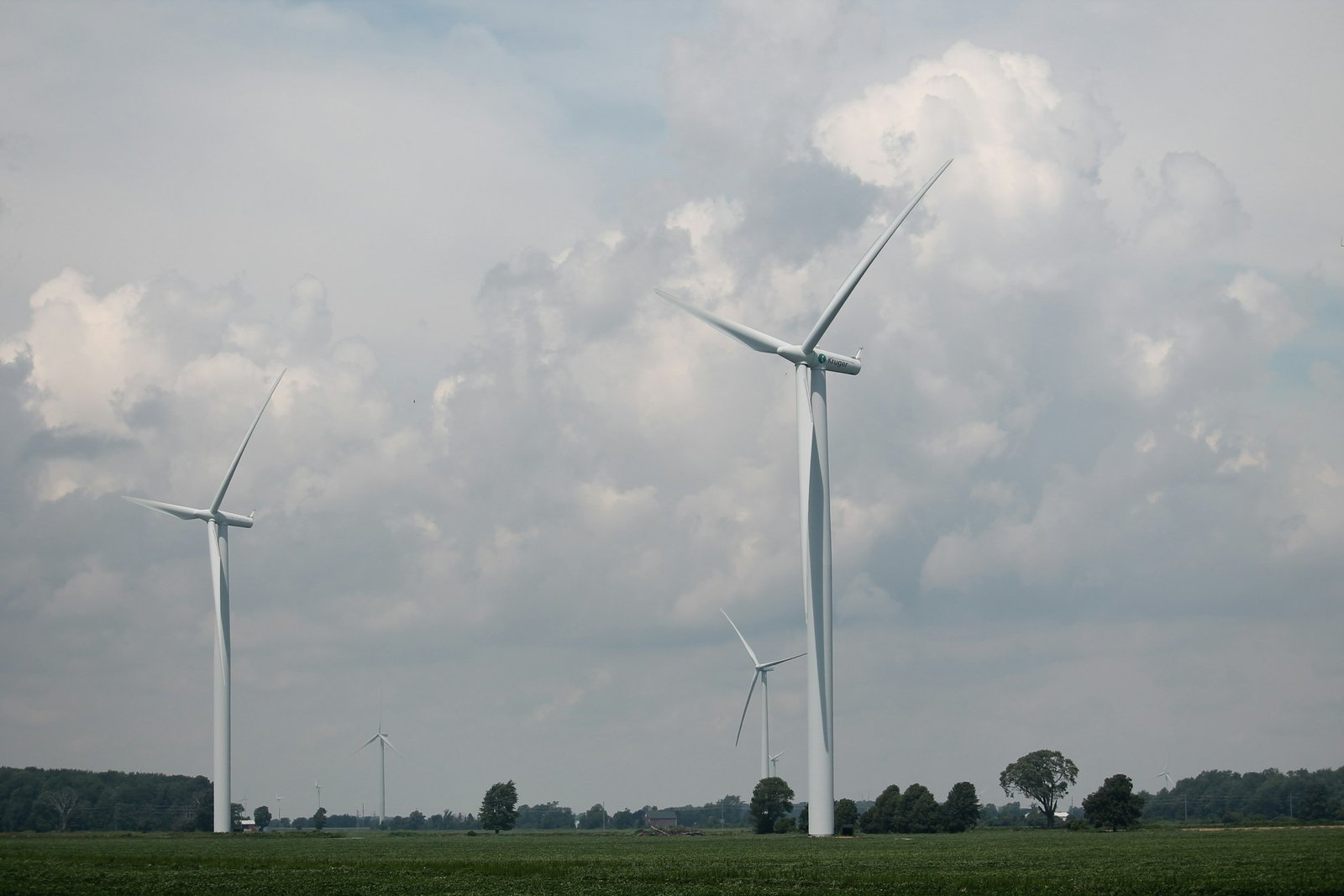
- A/O 2026-01 seeks 5 to 10 TWh of wind and prioritizes First Nations and community partnerships.
- The 2025 solar call drew 60 bids totalling 481 MW; results are expected in early 2027.
- New loads of 5 MW or more need ministerial authorization before Hydro-Québec can supply them.
Hydro Quebec calls for tenders: the essentials
Hydro Quebec calls for tenders are the main route for independent power producers, community partners and Indigenous-led developers to sell new renewable electricity in Quebec. Hydro-Québec, acting as distributor, buys supply beyond the low-cost "heritage pool" of existing hydroelectricity through long-term power purchase agreements. Demand is rising fast: in its November 2026 overview of energy resources filed with the Electricity Supply Plan 2027–2041, Hydro-Québec projects that Quebec customers' needs will grow by about 60 TWh to roughly 240 TWh by 2041, with winter peak demand reaching about 52,000 MW.

At the same time, the legal framework changed in 2025. Bill 69, the Act to ensure the responsible governance of energy resources (S.Q. 2025, c. 24), assented to on 7 June 2025, removed Hydro-Québec's general obligation to procure new supply by call for tenders, created a 25-year integrated energy resource management plan, and reorganized the rules for authorizing large new electricity loads. Calls for tenders remain central in practice, but they now sit alongside negotiated partnerships and government-directed procurement.
This article explains the legal framework, recent and current calls, the community and Indigenous participation requirements, and the separate authorization regime for large consumers such as data centres and industrial plants. For the broader sector picture, see our page on power and renewables.
The legal framework after the 2025 reform
Bill 69 replaced ss. 74.1 to 74.3 of the Act respecting the Régie de l'énergie. The new s. 74.1 requires the electric power distributor to secure, "by any means", the supply needed to meet Quebec's needs in excess of the heritage pool, including by contracting with a person or partnership that may be established in partnership with an Indigenous community or a municipality. Supply contracts require authorization of the Régie de l'énergie in the cases the Régie sets by regulation, except where:
- the contract for renewable electricity is awarded through a public call for tenders that treats suppliers with fairness and impartiality;
- the contract is entered into because of an emergency or for no more than three months; or
- the Government authorizes the contract on the conditions it sets.
Under the new s. 74.2, the Government may set general conditions for calls for tenders and supply contracts, and may require Hydro-Québec to hold a public call for a specified volume, with special conditions. Transitional provisions preserved the existing 300 MW solar call for tenders under its 2024 regulation.
The reform also created a planning layer. Under new s. 14.2 of the Act respecting the Ministère de l'Économie, de l'Innovation et de l'Énergie, the Minister establishes every six years a 25-year integrated energy resource management plan (IERMP) covering all energy sources, with policy directions, objectives and targets, including the electricity supply target that Hydro-Québec must meet. The plan is prepared with public consultation, including Indigenous communities, submitted to the Régie for its opinion and approved by the Government. Hydro-Québec's supply planning now refers expressly to the IERMP.
| Route to market | Legal basis | Régie authorization of the contract |
|---|---|---|
| Public call for tenders for renewable supply | s. 74.1, s. 74.2 Act respecting the Régie de l'énergie | Not required if the process is fair and impartial |
| Negotiated contract, including partnerships with Indigenous communities or municipalities | s. 74.1 | Required in the cases set by Régie regulation |
| Government-authorized contract | s. 74.1, third paragraph | Not required; Government sets conditions |
| Emergency or short-term (up to three months) | s. 74.1 | Not required |
Recent Hydro Quebec calls for tenders
Hydro-Québec's tender call page lists its recent procurements. Three stand out for developers and investors.
A/O 2023-01: 1,500 MW of wind. Launched on 31 March 2023, it drew 16 bids totalling 3,034 MW. Contracts were to be approved by the Régie under the rules then in force, with deliveries starting no later than 1 December 2027, 2028 or 2029 depending on the bid.
A/O 2025-01: up to 300 MW of solar. Hydro-Québec's first solar farm call, launched on 6 May 2025, targets projects of at most 25 MW connected to the distribution system. It requires maximized Quebec economic spinoffs, avoidance of agricultural zones and responsible equipment sourcing. The bids, opened in April 2026, totalled 481 MW from 60 projects in 14 administrative regions, and about 40% involved a local municipality or an Indigenous community. Results are expected in the first quarter of 2027, with deliveries by 1 December 2029. Hydro-Québec has stated a goal of 3,000 MW of solar by 2035.
A/O 2026-01: 5 to 10 TWh of wind. Announced on 10 April 2026, this wind call for tenders targets 5 to 10 TWh, roughly 1,500 to 3,000 MW, depending on competitiveness and social acceptability. It runs in three rounds, with commissioning between 2031 and 2038. First-round projects must be located in designated technical zones allowing connection between 2031 and 2035, and bids are due on 26 February 2027.
Community and Indigenous participation requirements
Successive Hydro Quebec calls for tenders have moved social acceptability from a scoring factor to a gatekeeper. Under A/O 2026-01, Hydro-Québec states that it will prioritize projects developed in partnership with First Nations and host communities. In addition:
- projects must have clear support from the municipalities concerned, and only projects supported by a municipal resolution may proceed;
- public consultations must take place before bid submission, and bidders must show how concerns were addressed;
- developers must make an annual financial contribution to local authorities, in addition to landowner agreements;
- bids must demonstrate Quebec content, local investment and use of the Quebec wind industry's expertise;
- following an agreement in principle with the Union des producteurs agricoles, siting rules for farmland and woodlands (including maple stands) were updated and the bid evaluation grid favours sites that minimize use of higher-quality land.
Partnership terms are now part of the bid, not an afterthought. Developers should settle governance, equity contributions, financing of the community partner's share, revenue sharing and exit rights with First Nations and municipal partners well before the bid deadline. Federal and provincial loan guarantee programmes for Indigenous equity can affect structure and timing; see our insight on Indigenous equity ownership and loan guarantees.
Beyond the call terms, projects remain subject to the usual approvals: Quebec environmental authorization and, for larger wind farms, the environmental impact assessment procedure, municipal zoning, agricultural land protection rules and, where applicable, the Crown's duty to consult. Our page on Indigenous law discusses consultation and partnership agreements.
Contract terms and financing after the award
Winning one of the Hydro Quebec calls for tenders is the start of a long contractual relationship, not the end of the process. The call documents include a form of electricity supply contract that bidders must accept with limited room for negotiation, so legal and financial review has to happen before the bid, not after. Lenders will focus on a handful of issues:
- Term and pricing. The contract length, the price structure and any indexation determine the revenue line that supports project debt.
- Delivery deadlines. Guaranteed commissioning dates, the consequences of delay and the treatment of events beyond the developer's control, including interconnection delays and permitting.
- Performance and security. Availability or energy delivery commitments, liquidated damages, and the form and amount of performance security.
- Assignment and change of control. Whether lenders can take security over the contract and step in, and whether equity transfers to partners or investors require consent.
- Community commitments. Financial contributions to municipalities, Quebec content undertakings and partnership obligations made in the bid may become contractual commitments, with consequences if they are not met.
Hydro Quebec calls for tenders have also been run with an independent overseer reviewing the process, bid evaluation and award, which supports the fairness and impartiality condition that lets awarded contracts proceed without Régie authorization. Bidders should keep a clean record of communications with Hydro-Québec during the bid period and follow the call's rules on questions and clarifications strictly, since a process complaint can delay an award.
Secured lending in Quebec uses Civil Code hypothecs rather than PPSA security; see our insight on movable hypothecs in Quebec for how lenders take security over project assets and contract rights.
Authorization for large new loads
The other side of Quebec's energy plan is who gets access to new power. As amended by Bill 69, s. 76 of the Act respecting the Régie de l'énergie keeps the general obligation of a distributor to supply anyone who asks within its territory, but requires ministerial authorization before supplying a request of at least 5 MW, or at least 50 kW for cryptocurrency mining. The distributor analyses connection capacity, economic benefits and social and environmental impacts, and makes a recommendation.
The Minister must reject the application if connection is not technically possible, and otherwise weighs the recommendation and the project's benefits and impacts. For requests up to 50 MW at an establishment already served, the Minister must decide within 15 working days of receiving the recommendation. Authorizations may carry conditions, including on economic benefits.
For data centres, hydrogen producers, battery-materials plants and other energy-intensive investments, this means power allocation is a government decision to be planned alongside site selection, permitting and incentives. Our insight on data centre grid connections compares approaches across provinces.
A bidder's checklist for Hydro Quebec calls for tenders
- Read the call document and the standard power purchase agreement together; the contract terms (indexation, performance obligations, penalties, security, termination) drive bankability.
- Confirm site control, land agreements and the technical zone or connection constraints early.
- Secure the municipal resolution and run public consultations before the bid deadline, documenting how concerns were addressed.
- Structure partnerships with Indigenous communities and municipalities, including governance and financing of their equity.
- Build a credible Quebec content plan for equipment, construction and services.
- Map the permitting path, including environmental assessment triggers and farmland rules.
- Model financing for the delivery deadline, including interconnection risk and supply-chain timing.
Illustration: a hypothetical European developer plans to bid a 400 MW wind project in A/O 2026-01 with two First Nations and a regional county municipality. Its first priorities are a partnership agreement giving the partners a meaningful equity stake and board seats, a municipal resolution of support, documented pre-bid consultations and an agricultural siting plan consistent with the updated UPA framework. Without these, the bid risks being screened out before price is even considered.
How TRW & Co helps
We advise developers, investors, lenders, Indigenous and municipal partners and large energy users on Hydro Quebec calls for tenders and Quebec's energy framework. We review call documents and power purchase agreements, structure partnerships and joint ventures, advise on project finance and Indigenous equity, and help large consumers plan for ministerial authorization of new loads. Where Quebec-licensed counsel is required, we work alongside them. This article is general information, not legal advice. To discuss a bid or project, contact us.
Frequently asked questions
Does Hydro-Québec still have to use calls for tenders?
Not as a general rule. Bill 69 (S.Q. 2025, c. 24) withdrew the general obligation to procure supply beyond the heritage pool by call for tenders, unless the Government decides otherwise. Hydro-Québec may contract by any means, but a contract awarded through a fair and impartial public call for renewable energy does not need Régie authorization.
What is the integrated energy resource management plan?
It is a 25-year plan the Minister must establish every six years under s. 14.2 of the Act respecting the Ministère de l'Économie, de l'Innovation et de l'Énergie. It covers all energy sources and sets the electricity supply target Hydro-Québec must achieve. It is prepared with public and Indigenous consultation, reviewed by the Régie and approved by the Government.
When are bids due in the 2026 wind call for tenders?
Hydro-Québec announced A/O 2026-01 on 10 April 2026. It runs in three rounds, and the bid deadline for the first round is 26 February 2027. First-round projects must be in designated technical zones allowing connection between 2031 and 2035.
Who needs ministerial authorization to obtain electricity?
Under s. 76 of the Act respecting the Régie de l'énergie, as amended in 2025, a distributor must obtain the Minister's authorization to supply a request of at least 5 MW, or at least 50 kW for cryptocurrency mining. The Minister considers technical connection capacity, economic benefits and social and environmental impacts.
Are Indigenous partnerships mandatory?
The 2026 wind call states that Hydro-Québec will prioritize projects developed in partnership with First Nations and host communities, and requires municipal support by resolution. The 2025 law also expressly contemplates supply contracts with entities established in partnership with an Indigenous community or a municipality. In practice, strong partnerships have become a competitive necessity.
Sources
- Bill 69, An Act to ensure the responsible governance of energy resources (S.Q. 2025, c. 24), assented to 7 June 2025
- Hydro-Québec, Tender calls for electric power purchases
- Hydro-Québec, new wind power call for tenders (10 April 2026)
- Hydro-Québec, first solar farm tender call: bids received (15 April 2026)
- Hydro-Québec, Overview of Energy Resources and Electricity Supply Plan 2027–2041 (3 November 2026)
General information only, not legal advice. References to statutes, courts and authorities describe published law and practice at the date shown.
 Quebec
Psychological Harassment and Psychosocial Risks in Quebec
Quebec employers must prevent psychological harassment from any person, adopt a detailed policy that now covers sexual violence, and treat psychosocial risks as part of occupational… 8 min read
 Quebec
Movable Hypothecs: Taking Security in Quebec
Movable hypothecs are how lenders take security over equipment, inventory, receivables and IP in Quebec. The Civil Code sets strict rules on who may grant them,… 8 min read
 Quebec
Exclusion and Limitation of Liability Clauses Under Quebec Law
Liability clauses under Quebec law are enforceable, but the Civil Code bars any exclusion for intentional or gross fault and any limit on bodily or moral… 8 min read