
Drone Law in Canada: RPAS Rules for Businesses
Drone law in Canada is set by Transport Canada under Part IX of the Canadian Aviation Regulations. Since 2025, operators choose between basic, advanced and level 1 complex operations, with lower-risk beyond visual line-of-sight flights now possible under an operator certificate. Privacy and local rules still apply on the ground.

Key takeaways
- Drones from 250 g to 150 kg must be registered and flown by a certified pilot.
- Basic operations require at least 30 m horizontal distance from uninvolved people and uncontrolled airspace.
- Since 4 November 2025, lower-risk BVLOS flights can proceed as level 1 complex operations under an RPAS operator certificate.
- Drones over 150 kg and other designated operations still need a special flight operations certificate.
- Privacy law applies to footage of bystanders collected for commercial purposes.
Drone law in Canada: the short answer
Drone law in Canada is federal aviation law. Transport Canada regulates remotely piloted aircraft systems (RPAS) under Part IX of the Canadian Aviation Regulations (CARs), made under the Aeronautics Act. Drones from 250 g up to 150 kg must be registered and flown by a certified pilot within one of three operating categories: basic operations, advanced operations and level 1 complex operations. Anything heavier than 150 kg, or outside those categories, needs a special flight operations certificate (SFOC). Provinces and municipalities cannot regulate flight itself, but privacy, trespass and land-use laws still apply on the ground.
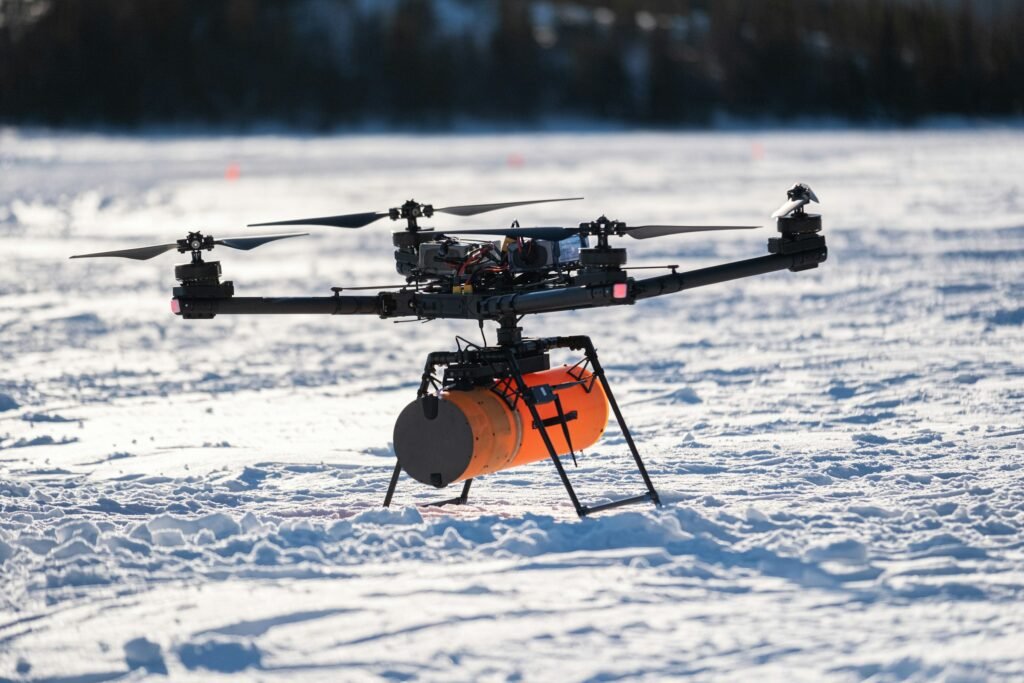
The regime changed significantly in 2025. SOR/2025-70, registered on 6 March 2025, came into force mainly on 1 April 2025, with a second group of provisions on 4 November 2025. It added a "medium" category of RPAS (over 25 kg up to 150 kg), new extended visual line-of-sight and sheltered operations, and a certificate-based path for lower-risk beyond visual line-of-sight (BVLOS) flights. Businesses that structured their drone programs around the 2019 rules should review them against the current text.
Operating categories under Canadian drone law
| Category | Where it applies (summary) | Minimum pilot age | Pilot certificate |
|---|---|---|---|
| Basic operations (Division IV) | Small RPAS (250 g to 25 kg), VLOS, uncontrolled airspace, at least 30 m horizontally from people not involved | 14 | Basic, advanced or level 1 complex |
| Advanced operations (Division V) | Small RPAS in controlled airspace, near people (under 30 m), near airports or heliports; extended VLOS and sheltered operations; medium RPAS in VLOS away from people | 16 | Advanced or level 1 complex, with flight review |
| Level 1 complex operations (Division VI) | BVLOS in uncontrolled airspace: small or medium RPAS at least 1 km from populated areas; small RPAS over sparsely populated areas or closer than 1 km | 18 | Level 1 complex, plus an RPAS operator certificate |
| SFOC (Part IX, Subpart 3) | RPAS over 150 kg; sub-250 g drones at advertised events; other operations the Minister designates | As set in the certificate | As set in the certificate |
Drones under 250 g ("micro" drones) sit largely outside the registration and certification system, but pilots must still fly safely and not endanger aviation or people, and an SFOC is required to fly them at advertised events. Above 150 kg, the aircraft is treated as a large RPAS and always needs an SFOC. Between those limits, the weight category matters: medium RPAS of more than 25 kg can be flown only in the specific advanced and level 1 complex operations that the regulations allow, and they face stricter distance and equipment requirements than small drones.
The categories are defined by risk rather than by purpose. A real estate photographer and a hobbyist flying the same drone in the same place face the same rules. Commercial use no longer triggers a separate permit, but it often pushes operators into advanced operations because work sites tend to be near people, in controlled airspace or close to airports.
Basic and advanced operations
Basic operations
Under s. 901.53 CARs, basic operations cover a small RPAS flown in visual line-of-sight (VLOS) in uncontrolled airspace and at least 100 feet (30 m), measured horizontally at any altitude, from anyone not involved in the operation. The pilot must be at least 14 and hold one of the pilot certificates listed in s. 901.54. Basic certificates are obtained by passing an online knowledge examination.
Advanced operations
Section 901.62 lists the operations that require an advanced certificate. They include VLOS flights in controlled airspace, flights within 30 m of people not involved in the operation (with further limits below 5 m), flights within three nautical miles of an airport or one nautical mile of a heliport, extended VLOS and sheltered operations, and certain operations of medium RPAS. Advanced pilots must pass an examination and a flight review. For flights close to people or in controlled airspace, the manufacturer must have declared that the drone meets the relevant safety assurance standard (s. 901.69), and operations in controlled airspace need air traffic control authorization (s. 901.71).
Universal rules
Whatever the category, pilots must observe the general operating rules in Part IX. These include an altitude limit of 400 feet (122 m) above ground level, or 100 feet above a building within 200 feet horizontally, unless an SFOC authorizes otherwise (s. 901.25). Registration, marking, pre-flight checks, site surveys, emergency procedures, and restrictions near emergency operations and advertised events also apply.
Beyond visual line-of-sight and level 1 complex operations
BVLOS is the key to commercial scale for inspection, mapping, agriculture and delivery. Since 4 November 2025, Division VI of Part IX allows lower-risk BVLOS flights without an SFOC, but only within defined limits. Under s. 901.87, level 1 complex operations cover:
- small or medium RPAS flown BVLOS in uncontrolled airspace at least 1 km from a populated area; and
- small RPAS flown BVLOS in uncontrolled airspace over a sparsely populated area or less than 1 km from a populated area.
Section 901.88 requires the flight to be conducted by, or on behalf of, a holder of an RPAS operator certificate, in compliance with its conditions. Pilots must be at least 18 and hold a level 1 complex operations pilot certificate (s. 901.89). Operators should expect to document maintenance, training, operational procedures and risk assessments in a way that resembles traditional aviation operators. BVLOS flights in controlled airspace or over populated areas generally remain SFOC territory.
For a BVLOS program, the operator certificate is the critical path. Build the operations manual, maintenance control and training records before scaling the fleet, and treat drone law compliance as an aviation safety management system rather than a pilot-licensing exercise.
Special flight operations certificates
Section 903.01 requires an SFOC for RPAS with an operating weight of more than 150 kg, for sub-250 g drones at advertised events, and for any other operation of a small or medium RPAS that the Minister determines requires one to ensure aviation safety or the safety of any person. Applications must describe the aircraft, the operation, the crew, the area and the safety case, and the Minister can attach detailed conditions. Processing times vary with complexity, so operators planning heavy-lift, high-altitude, night BVLOS in controlled airspace or swarm operations should engage early with Transport Canada.
Foreign operators must meet the same Part IX requirements as Canadian ones. A foreign company planning a Canadian inspection or survey contract should confirm whether its pilots need Canadian certificates and whether its aircraft must be registered in Canada.
Drone law on the ground: privacy, trespass and local rules
Drone law in Canada does not end with aviation rules. Drones with cameras collect personal information, and businesses using them for commercial purposes must comply with the Personal Information Protection and Electronic Documents Act (PIPEDA) or the substantially similar laws of Quebec, British Columbia and Alberta. That means identifying the purposes for filming, limiting collection of bystanders' images, securing and deleting footage, and being transparent about surveillance. Our page on privacy and data protection covers these duties.
Civil liability also applies. Ontario courts recognize the tort of intrusion upon seclusion, and other provinces have statutory privacy torts. Trespass and nuisance claims can arise from low flights over private land. Municipalities often restrict take-off and landing in parks and on municipal property, and provincial parks and Indigenous lands can have their own access rules. The Criminal Code, including voyeurism provisions, applies to misuse of camera-equipped drones.
Enforcement, insurance and contracts
Transport Canada enforces drone law through administrative monetary penalties under the Aeronautics Act. The CARs designate many Part IX provisions, with maximum penalties for individuals and corporations set out in the regulations; for some RPAS provisions, the maximum reaches CAD 5,000 for an individual and CAD 25,000 for a corporation per contravention. Serious incidents can also lead to suspension of certificates.
Commercial clients routinely require drone operators to carry aviation liability insurance, and insurers increasingly ask which CARs category an operation falls into. A sound drone services agreement should cover the operating category and approvals, who obtains airspace authorizations, pilot qualifications, data ownership and privacy compliance, insurance limits, indemnities, and what happens when weather or regulatory restrictions prevent flights.
Defence drones and procurement
Military drones fall outside the CARs, but suppliers face other regimes. Federal defence procurement involves security requirements, industrial and technological benefits obligations, and in many cases the Controlled Goods Program under the Defence Production Act, which regulates access to listed military goods and technology. Export of drones and components is controlled under the Export and Import Permits Act and Canada's Export Control List. Foreign investment in Canadian drone makers may be reviewed for national security under the Investment Canada Act. See our pages on defence and aerospace and sanctions and export controls.
A drone law checklist for a new commercial program
Illustration: a utility wants to replace helicopter patrols of rural transmission lines with drones flown from a central control room. Under current drone law, a realistic path would look like this:
- Classify the missions. Short VLOS inspections near substations may be advanced operations; long linear patrols away from towns may fit level 1 complex operations; flights over towns or in controlled airspace near airports may still need an SFOC.
- Select aircraft. Confirm weight category (small or medium), manufacturer safety declarations for the intended operations and maintenance documentation.
- Build the operator. Prepare for an RPAS operator certificate: organization chart, operations manual, maintenance control, training, record-keeping and occurrence reporting.
- Qualify pilots. Plan examinations, flight reviews and recency requirements for each certificate level.
- Address the ground. Secure landowner access for launch sites, review municipal restrictions and complete a privacy assessment for images of homes and people near the lines.
- Contract and insure. Align service contracts, data ownership, indemnities and insurance with the operating model.
The same steps apply, with different emphasis, to drone delivery, agriculture and construction monitoring. In each case, drone law compliance is easiest when it is designed into the program from the start rather than added after aircraft are purchased.
How TRW & Co helps
We advise drone operators, manufacturers, infrastructure owners and investors on drone law in Canada. We help clients map operations to the right CARs category, prepare for RPAS operator certificates and SFOC applications, draft drone services and data agreements, design privacy-compliant data programs and allocate liability and insurance. For defence and dual-use technology, we advise on procurement, controlled goods and export controls. See also our insight on autonomous vehicles regulation. Applications to Transport Canada are prepared with the client's aviation team, and we coordinate with locally licensed professionals where a filing requires one. To discuss a program, contact us. This article is general information, not legal advice.
Frequently asked questions
Do I need a licence to fly a drone for business in Canada?
If the drone weighs 250 g to 150 kg, the pilot needs a Transport Canada pilot certificate for the relevant category and the drone must be registered. Commercial use does not require a separate permit, but work near people, in controlled airspace or near airports usually requires an advanced certificate.
Can drones fly beyond visual line-of-sight in Canada?
Yes, within limits. Since 4 November 2025, level 1 complex operations allow BVLOS flights of small or medium drones in uncontrolled airspace away from populated areas, and of small drones over sparsely populated areas, if flown under an RPAS operator certificate by a pilot aged 18 or over with a level 1 complex certificate.
When is a special flight operations certificate required?
Under s. 903.01 CARs, an SFOC is required for drones over 150 kg, for drones under 250 g flown at advertised events, and for any other operation the Minister determines needs one for safety. Operations outside the basic, advanced and level 1 complex categories generally require one.
How high can a drone fly in Canada?
Under s. 901.25 CARs, the limit is 400 feet (122 m) above ground level, or 100 feet above a building or structure when flying within 200 feet of it horizontally, unless an SFOC authorizes a higher altitude.
Do privacy laws apply to drone footage?
Yes. Businesses collecting images of identifiable people must comply with PIPEDA or the substantially similar private-sector privacy laws of Quebec, British Columbia and Alberta. Provincial privacy torts, trespass and the Criminal Code can also apply to intrusive drone use.
Sources
General information only, not legal advice. References to statutes, courts and authorities describe published law and practice at the date shown.
 Technology, Privacy & AI
Open Source Software Compliance
Open source software compliance means honouring the conditions of the copyright licences attached to every component you use. The key risks come from copyleft licences, especially… 8 min read
 Technology, Privacy & AI
Online News Act: Platforms, Publishers and Bargaining
The Online News Act requires the largest search engines and social media platforms to bargain with eligible Canadian news businesses or obtain an exemption through qualifying… 8 min read
 Technology, Privacy & AI
Agentic Commerce: Contracting Through AI Agents
Agentic commerce, where AI agents shop, negotiate and pay for users, fits partly within existing Canadian law. Electronic commerce statutes allow contracts formed by electronic agents… 8 min read