
Offshore Wind and the Atlantic Accord Acts
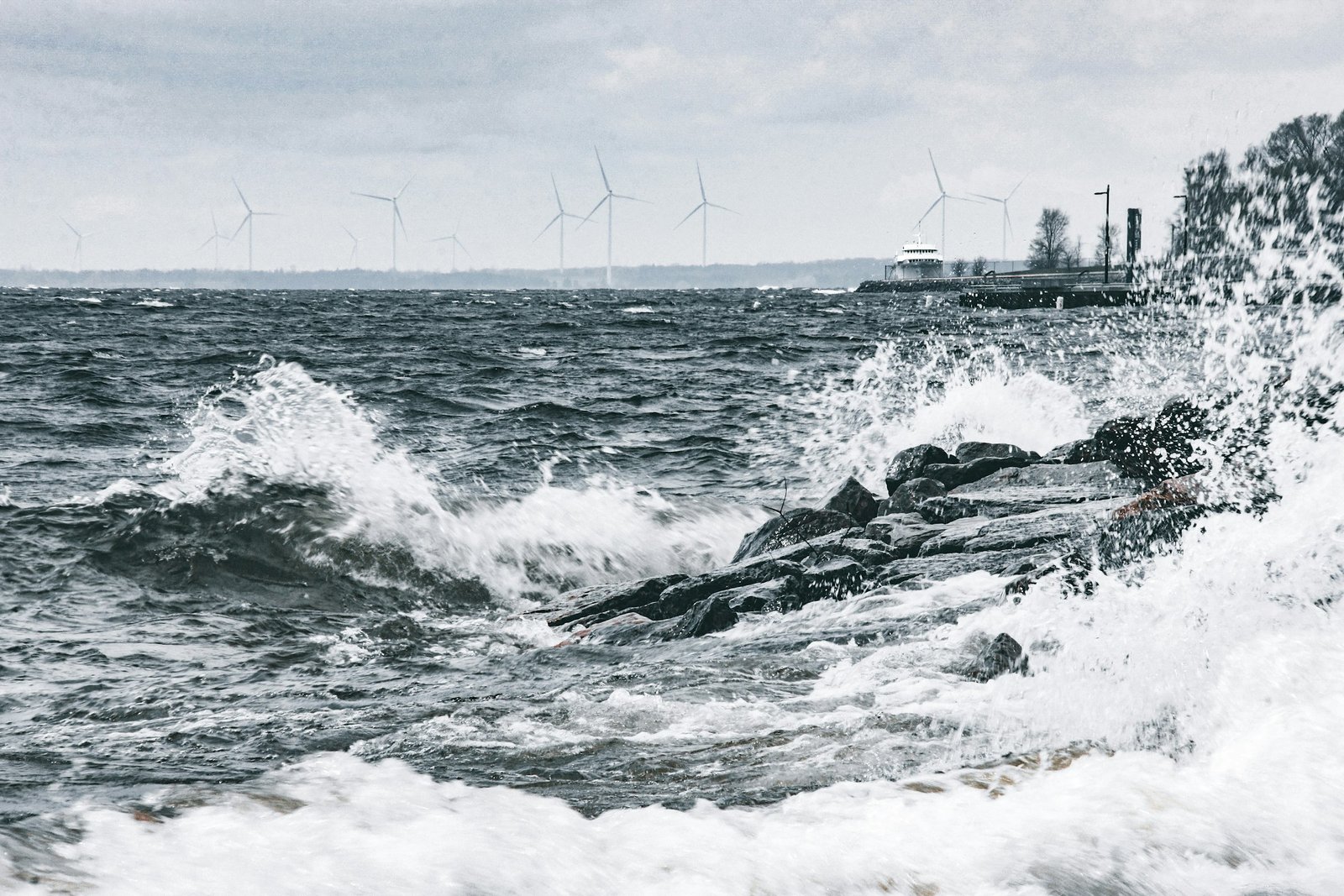
Offshore wind now has a legal framework in Atlantic Canada. The 2024 amendments to the Accord Acts let the offshore energy regulators award exclusive development rights through calls for bids, and Nova Scotia’s first four wind energy areas were designated in July 2025. This guide explains the process, assessment, fisheries issues and how to prepare.
Key takeaways
- Federal amendments in 2024 (S.C. 2024, c. 20) extended the Accord Acts to offshore renewable energy.
- The boards became the Canada–Nova Scotia and Canada–Newfoundland and Labrador Offshore Energy Regulators.
- Four wind energy areas off Nova Scotia were designated in July 2025.
- Governments target licences for up to 3,000 MW, with ambitions of 5,000 MW.
- A submerged land licence grants exclusive development rights but no right to start work.
How offshore wind is regulated in Atlantic Canada
Offshore wind in Atlantic Canada is governed by the same joint federal-provincial "Accord" framework that has regulated offshore oil and gas off Nova Scotia and Newfoundland and Labrador for decades. In 2024, Parliament amended the two Accord Acts to extend that framework to offshore renewable energy, renaming the boards as offshore energy regulators and creating a process for awarding exclusive rights to develop wind projects through competitive calls for bids.
In July 2025 the federal and Nova Scotia governments designated Canada's first four offshore wind energy areas, and in September 2025 they directed the regulator to begin prequalification toward a first call for bids. Developers, supply chain companies, fishers and Indigenous communities now have a defined legal path to follow, even though the first licences have not yet been issued.

This note explains the legislative amendments, the step-by-step land tenure process, environmental assessment, the interaction with fisheries and Indigenous rights, and what bidders should prepare. It is general information based on sources reviewed in November 2026, not legal advice.
The 2024 Accord Act amendments
The offshore areas off Nova Scotia and Newfoundland and Labrador are managed jointly under mirror federal and provincial statutes implementing the Canada–Nova Scotia and Canada–Newfoundland and Labrador Atlantic Accords. Federal legislation enacted in 2024 (S.C. 2024, c. 20, from Bill C-49) amended both regimes to cover offshore renewable energy. The federal Newfoundland and Labrador statute is now titled the Canada–Newfoundland and Labrador Atlantic Accord Implementation and Offshore Renewable Energy Management Act, and the boards became the Canada–Newfoundland and Labrador Offshore Energy Regulator and the Canada–Nova Scotia Offshore Energy Regulator (CNSOER).
The amendments added a new rights regime for renewable energy, including submerged land licences for offshore renewable energy projects, rules on calls for bids and licence terms, and decision-making by federal and provincial ministers on key steps. They also extended the regulators' safety, environmental and operational authority to renewable projects, including project authorizations under the operational parts of the Acts. Matching provincial legislation is required for the joint regime to operate, and both provinces have legislated accordingly.
The offshore wind land tenure process
According to Natural Resources Canada's description of the process, rights are awarded in a sequence of steps:
| Step | What happens | Who decides |
|---|---|---|
| 1. Regional or strategic environmental assessment | Identifies suitable areas, data gaps and mitigation, with public engagement | Governments, informed by assessment committees |
| 2. Wind energy area designation | Large areas designated after public comment; a planning tool, not a guarantee of development | Federal and provincial ministers jointly |
| 3. Strategic direction | Ministers direct the regulator on the call for information, areas, timelines and criteria | Ministers |
| 4. Call for information and prequalification | Regulator consults stakeholders, fishers and Indigenous groups and prequalifies eligible companies | Regulator |
| 5. Recommendation and call for bids | Regulator recommends bidding criteria, licence terms and parcels; public competition follows | Ministers decide; regulator runs call |
| 6. Submerged land licence | Exclusive right to develop a project in the parcel; no work permitted yet | Ministers decide on regulator's recommendation |
| 7. Project authorization | Authorization under the operational part of the Accord Acts before any work | Regulator, with other permits |
The licence is therefore an exclusive development right rather than a permit to build. A licence holder must still complete environmental assessment, obtain project authorization, secure a route to market for its power and meet any conditions attached to the licence.
Nova Scotia's first offshore wind areas and call for bids
In July 2025, federal and Nova Scotia ministers designated four wind energy areas off Nova Scotia: French Bank, Middle Bank, Sable Island Bank and Sydney Bight, after publishing proposed areas in a March 2025 discussion paper for public engagement. On 18 September 2025, the governments issued strategic direction to the CNSOER to proceed with prequalification and a call for information toward a first call for bids. NRCan states that governments are targeting licences for up to 3,000 MW across Sydney Bight, Middle Bank and French Bank, with near-term ambitions of 5,000 MW. As of NRCan's page dated 25 March 2026, no date had been set for the first call for bids.
The scale of these targets far exceeds Nova Scotia's own electricity demand, which means that export, whether to other provinces, to the United States or through conversion to hydrogen or other products, is central to the business case. Bidders will need credible plans for transmission, offtake and grid integration, and the call for bids will likely assess those plans alongside price or other financial criteria.
Prequalification is a gate. Companies interested in offshore wind in Atlantic Canada should prepare evidence of technical experience, financial capacity and corporate structure early, and should consider consortium arrangements with partners, including Indigenous partners, before prequalification closes.
Licence terms and obligations to expect
The Accord Acts leave much of the detail to the call for bids and the licence itself. Based on how the regulators have run offshore petroleum calls for decades, bidders can expect licence terms covering the licence period and conditions for extension, work commitments and milestones, deposits or security, reporting obligations, and grounds for cancellation if the holder fails to progress. The legislation gives ministers a role in approving bidding criteria and licence terms, so the first call for bids will set important precedents for later rounds.
Bidding criteria may combine financial elements, such as a bonus bid or rental payments, with non-price factors, such as benefits to the provinces, Indigenous participation, supply chain commitments and project readiness. Bidders should read the criteria closely and prepare evidence for each, because the regulator's recommendation to ministers will be tied to them. Once a licence is awarded, changes to the project area or the licensee's corporate structure are likely to require regulatory consent, which affects joint venture planning and future sales of interests.
Benefits plans, ports and supply chain
The offshore petroleum regime has long required benefits plans showing how operators will provide employment and business opportunities to residents of the province and Canada, and the amended Accord Acts extend similar expectations to renewable projects. Developers should therefore plan early for local procurement, workforce training and research commitments, and for the role of Atlantic Canadian ports in fabrication, staging and operations. Port capacity, vessel availability and component manufacturing are likely bottlenecks, and agreements with port authorities and suppliers may be needed well before a final investment decision.
Supply chain commitments must also be compatible with Canada's trade obligations and with the economics of a first-of-a-kind project. Overly ambitious local content promises can make a bid uncompetitive or a project unfinanceable, so commitments should be realistic and linked to measurable milestones that the developer can actually control.
Environmental assessment and the regional approach
Offshore wind areas were identified using regional assessments under the federal Impact Assessment Act for the Nova Scotia and Newfoundland and Labrador offshore areas, which examined environmental conditions, effects of offshore wind development and mitigation measures across large areas. The regional approach is meant to reduce project-specific assessment burden by front-loading baseline work and identifying constraints before areas are designated.
Individual projects will still need project-level assessment and regulatory approvals. Depending on size and location, a project may be a designated project under the Impact Assessment Act, and it will need authorization from the regulator, approvals for cables landing onshore, and provincial approvals for onshore infrastructure. Fisheries Act and Species at Risk Act requirements may apply to cable routes, foundations and construction activities; see our note on Fisheries Act authorizations.
Fisheries interaction and Indigenous rights
Atlantic Canada's fisheries are economically and culturally important, and offshore wind areas overlap with fishing grounds. The tenure process requires consultation with fishers and Indigenous groups at the call for information stage, and licence terms are expected to address coexistence measures, such as navigation corridors, gear conflicts, communication protocols and compensation for losses. Developers should expect detailed fisheries engagement and may need fisheries liaison plans and compensation frameworks as a condition of approvals.
Mi'kmaq, Wolastoqiyik, Innu, Inuit and other Indigenous communities hold Aboriginal and treaty rights in the region, including commercial fishing rights recognized by the courts. The Crown's duty to consult applies to designation, licensing and authorization decisions, and governments have signalled interest in Indigenous equity participation in offshore wind and related transmission. Our notes on Indigenous equity ownership and the duty to consult are relevant.
Commercial structuring for offshore wind
Offshore wind projects are among the most capital-intensive energy projects. Key structuring questions include the route to market (provincial utility contracts, interprovincial or export sales, or hydrogen and ammonia production), grid connection and transmission ownership, port infrastructure and supply chain commitments, and federal investment tax credits for clean electricity. Financing will require a bankable licence, a stable offtake, a robust construction contract structure and comprehensive insurance. Our pages on power and renewables and project finance describe common structures.
Cross-border and foreign investment issues
Many likely bidders are foreign developers. Foreign investment in offshore energy infrastructure may attract national security review under the Investment Canada Act, particularly where critical infrastructure or sensitive technologies are involved. Export of power to the United States raises additional regulatory questions on both sides of the border, including federal export authorizations in Canada. These issues should be mapped alongside the bid strategy.
Decommissioning and financial security
Offshore installations must eventually be removed, and regulators typically require operators to demonstrate financial responsibility for abandonment and decommissioning, as well as liability for spills, debris and damage. The amended Accord Acts apply financial responsibility concepts developed for petroleum activities to renewable projects, with amounts and forms to be set by regulation or by the regulator. Developers should build decommissioning costs and security into project economics from the start, since they will affect both bid pricing and financing terms.
Bidder checklist
- Monitor CNSOER and C-NLOER notices on calls for information, prequalification and calls for bids.
- Assemble evidence of technical and financial capacity for prequalification.
- Develop a credible route-to-market and transmission plan.
- Begin fisheries and Indigenous engagement early and consider partnership structures.
- Plan for project-level assessment, authorizations and onshore permits.
- Assess Investment Canada Act and export authorization requirements.
- Model decommissioning costs, financial security and benefits plan commitments in the bid price.
- Secure port, vessel and supply chain options before committing to delivery dates.
How TRW & Co helps
We advise developers, investors, utilities, supply chain companies and Indigenous partners on offshore wind in Atlantic Canada. We analyse the Accord Act regime, support prequalification and bid strategy, structure consortiums and partnerships, review licence terms and offtake arrangements, and assess environmental, fisheries and foreign investment issues. Where a matter requires a lawyer licensed in Nova Scotia or Newfoundland and Labrador, we work with local counsel. To discuss a project, contact us.
Frequently asked questions
Who regulates offshore wind in Atlantic Canada?
The Canada–Nova Scotia Offshore Energy Regulator and the Canada–Newfoundland and Labrador Offshore Energy Regulator, under the Accord Acts as amended in 2024. Federal and provincial ministers jointly make key decisions such as designating wind energy areas, approving calls for bids and issuing licences.
What is a submerged land licence?
It is the right awarded through a call for bids that gives the holder the exclusive right to develop an offshore renewable energy project in a parcel. It does not permit work; the holder must still obtain a project authorization under the operational part of the Accord Acts and other required approvals.
Which offshore wind areas have been designated?
In July 2025, ministers designated four wind energy areas off Nova Scotia: French Bank, Middle Bank, Sable Island Bank and Sydney Bight. In September 2025 they directed the regulator to proceed with prequalification and a call for information toward a first call for bids.
Is an impact assessment required for offshore wind projects?
Regional assessments informed the designation of wind energy areas. Individual projects may also require project-level assessment, depending on size and location, as well as authorization from the regulator, approvals for cable landings and onshore works, and Fisheries Act and Species at Risk Act compliance.
How are fishers and Indigenous communities involved?
The regulator consults fishers and Indigenous groups during the call for information, and licence terms are expected to address coexistence and compensation. The Crown’s duty to consult applies to designation, licensing and authorization decisions, and governments have signalled support for Indigenous equity participation.
Sources
General information only, not legal advice. References to statutes, courts and authorities describe published law and practice at the date shown.
 Energy, Mining & Environment
IESO Procurements: Ontario Electricity RFPs
IESO procurements award the long-term contracts that underpin new electricity supply in Ontario. This note explains LT1 and the LT2 windows, the new repowering route, long-lead-time… 8 min read
 Energy, Mining & Environment
Hydrogen Projects: Canada's Legal Framework
Hydrogen projects in Canada depend on a refundable federal tax credit tied to carbon intensity, provincial permitting and long-term offtake. This note explains the Clean Hydrogen… 8 min read
 Energy, Mining & Environment
Clean Technology, Clean Electricity and Hydrogen ITCs Compared
Canada's clean technology ITCs reward investment in low-carbon property, but they differ in rates, eligible taxpayers and conditions. This note compares the Clean Technology ITC (30%),… 8 min read