
Small Modular Reactors: Licensing and Liability
Small modular reactors in Canada follow a staged federal licensing path that is now tested in practice. The CNSC licensed construction of the first BWRX-300 at Darlington in April 2025, the Impact Assessment Act applies only above set thermal thresholds, and the Nuclear Liability and Compensation Act channels liability to operators up to CAD 1 billion.
Key takeaways
- The CNSC licenses each life-cycle stage: site preparation, construction, operation and decommissioning.
- OPG received a construction licence for one BWRX-300 at Darlington on 4 April 2025, valid to 2035.
- The IAA applies to new reactors above 200 MWth, or 900 MWth within existing nuclear sites.
- The NLCA makes operators absolutely and exclusively liable, limited to CAD 1 billion.
- Bankability depends on provincial offtake, cost-overrun allocation and vendor contract terms.
The legal path for small modular reactors in Canada
Small modular reactors in Canada move through a well-defined federal licensing system. The Canadian Nuclear Safety Commission (CNSC) licenses each stage of a reactor's life under the Nuclear Safety and Control Act (NSCA); the Impact Assessment Act (IAA) applies to larger reactor projects; the Nuclear Liability and Compensation Act (NLCA) channels liability to the operator and caps it; and provincial law governs electricity markets, land use and many permits. The first construction licence for a grid-scale SMR in Canada, issued to Ontario Power Generation in April 2025, has turned this framework from theory into a working precedent that developers, suppliers, lenders and Indigenous partners can study.
Nuclear energy falls within federal jurisdiction for safety, security and non-proliferation, while provinces decide whether and how nuclear power fits their electricity systems. That split shapes every project: a reactor can hold every federal licence and still need a provincial procurement decision, a rate-regulated cost recovery mechanism or a power purchase agreement before it is financeable.
CNSC licensing stages
Under the NSCA and the Class I Nuclear Facilities Regulations, a reactor needs separate licences for each phase: to prepare a site, to construct, to operate, to decommission and to abandon. The Commission may combine stages, but each requires the applicant to show that it is qualified and will make adequate provision for the protection of the environment, the health and safety of persons and national security. Applications are heard in public, and intervenors, including Indigenous Nations, may participate.
| Stage | What the applicant must show | Practical notes |
|---|---|---|
| Vendor design review (optional) | Pre-licensing technical review of a reactor design by CNSC staff | Not a licence, but reduces regulatory uncertainty for later applications |
| Licence to prepare site | Site suitability, environmental baseline, emergency planning concepts | Often linked to an environmental or impact assessment |
| Licence to construct | Design, safety analysis, construction quality, management system | Darlington BWRX-300 licence issued 4 April 2025 |
| Licence to operate | Commissioning, staffing, operating procedures, safeguards | Fuel loading only after this licence |
| Decommission and abandon | Decommissioning plan and financial guarantee | Financial guarantees are required throughout the life cycle |
The CNSC's decision also involves the Crown's duty to consult. In the Darlington decision, the Commission concluded it had fulfilled its constitutional responsibility to consult and, where appropriate, accommodate Indigenous rights. Proponents should expect to fund participation, share technical information and record commitments in agreements that can be referenced in the licensing record.
The Darlington SMR as a precedent
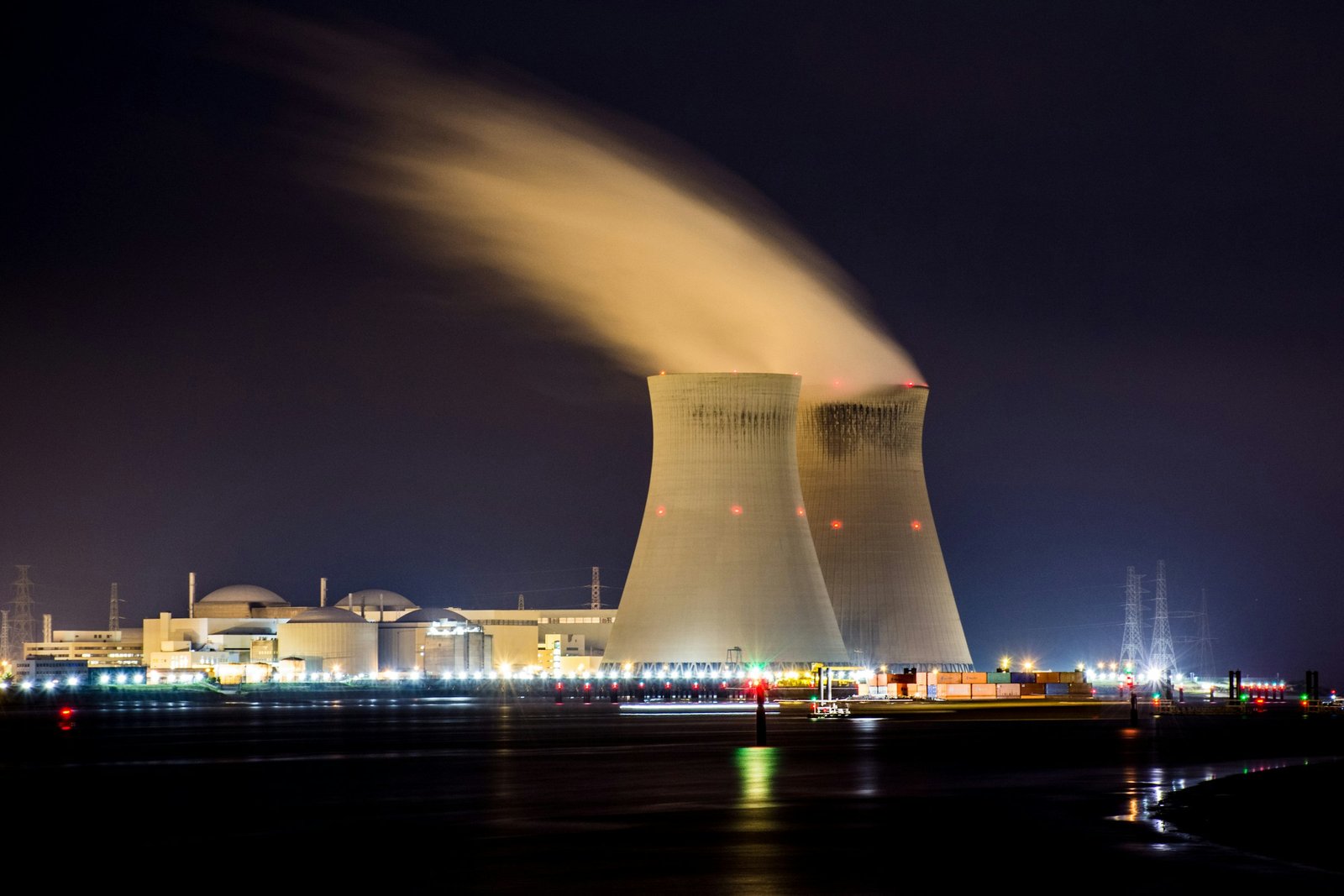
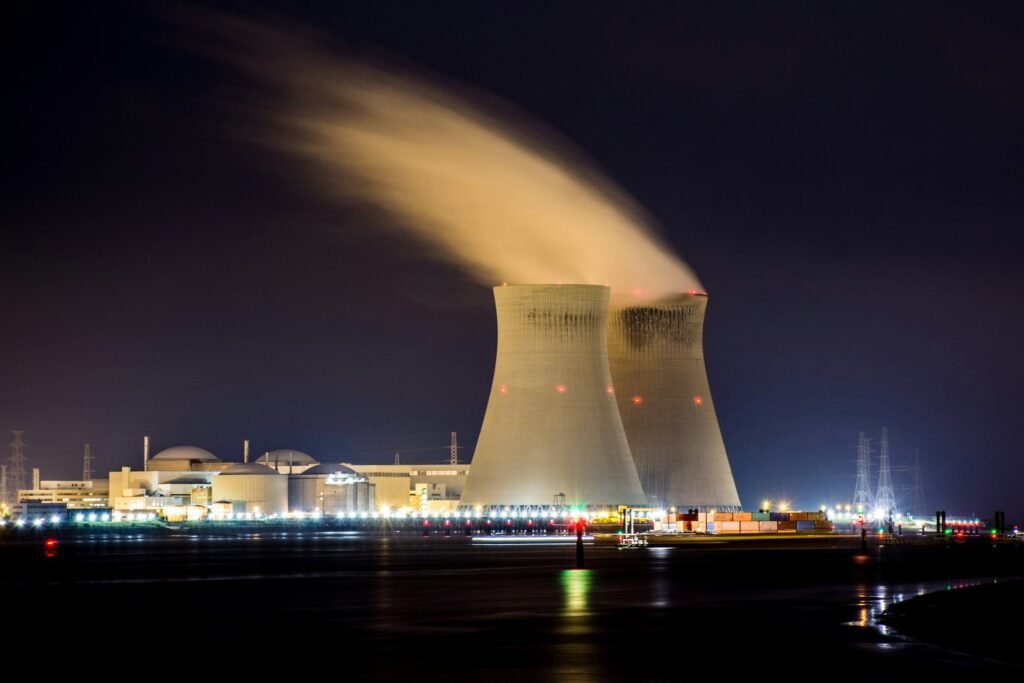
On 4 April 2025 the Commission authorized Ontario Power Generation to construct one GE Hitachi BWRX-300 reactor at the Darlington New Nuclear Project site in Clarington, Ontario. The power reactor construction licence is valid until 31 March 2035 and includes four facility-specific licence conditions in addition to standard conditions. The Commission concluded that OPG is qualified to construct the reactor and will do so in a way that protects health, safety and the environment.
Several features make Darlington useful to later small modular reactors. It was built on an existing nuclear site with a prior site-preparation licence and environmental assessment, which narrowed the issues for the construction hearing. The operator is an experienced utility with an established management system. And the design had been through CNSC pre-licensing review. New entrants without those advantages, such as developers proposing reactors at industrial or remote sites, should expect a longer record and more questions about organizational capability, emergency planning and waste.
A reactor vendor's design review does not transfer licensing risk to the vendor. The licensee remains responsible for demonstrating safety at its site. Supply and engineering contracts should therefore allocate the cost of design changes required by the CNSC, set information-sharing duties for licensing submissions and address delay caused by regulatory requests.
When the Impact Assessment Act applies to small modular reactors
The IAA applies to "designated projects" listed in the Physical Activities Regulations. Section 27 captures the site preparation, construction, operation and decommissioning of one or more new nuclear fission or fusion reactors if:
- the activity is within the licensed boundaries of an existing Class IA nuclear facility and the new reactors have a combined thermal capacity of more than 900 MWth; or
- the activity is not within such boundaries and the new reactors have a combined thermal capacity of more than 200 MWth.
Many small modular reactors fall below these thresholds, particularly single units at existing nuclear sites. Projects below the thresholds still undergo an environmental review by the CNSC under the NSCA, and the Minister of the Environment retains power to designate projects not on the list. Section 28 separately captures new facilities for the storage of irradiated fuel or nuclear waste outside an existing nuclear facility's licensed boundaries, other than on-site storage associated with new reactors of less than 200 MWth combined. After the Supreme Court's decision in Reference re Impact Assessment Act, the designation and decision-making scheme was amended, so the version of the IAA in force should be checked for any project near the thresholds.
Nuclear liability: the $1 billion operator regime
The Nuclear Liability and Compensation Act implements Canada's civil nuclear liability system. Its central features are simple but important for every participant in a reactor project:
- Channelling: the operator of the nuclear installation, and no other person, is liable for damage caused by a nuclear incident (s. 9). Suppliers, vendors and contractors are therefore protected from third-party nuclear damage claims.
- Absolute liability: the operator's liability is absolute, so claimants need not prove fault (s. 10).
- Limit: liability for a nuclear incident is limited to CAD 1 billion, the final step of a phase-in under s. 24(1). The Governor in Council may increase the amount by regulation, or reduce it for an operator or class of installations having regard to the nature of the installation and nuclear material.
- Financial security: operators must maintain financial security for each installation equal to the liability amount (s. 27), in the form of insurance with an approved insurer on a standard policy approved by the Minister (s. 28(1)).
The power to set a lower limit for a class of installations is relevant to small modular reactors and micro-reactors, whose risk profile differs from large CANDU stations. Developers should monitor whether regulations prescribe reduced amounts for these technologies. Contracts should still deal with damage to the operator's own property and with claims outside the NLCA's scope, such as conventional workplace or commercial claims, which are not channelled.
Contracting around the liability regime
Because nuclear damage claims are channelled to the operator, the commercial negotiation shifts to other categories of loss. Vendors usually seek caps on their liability for defects and delay, exclusions for consequential loss and waivers of subrogation from the operator's property insurers. Operators, in turn, seek performance guarantees, liquidated damages for late delivery and step-in rights if a key supplier fails. Lenders will look for a coherent insurance programme covering nuclear liability, property damage, construction all-risk and business interruption, with clear evidence that each policy responds as intended. Where a project involves a joint venture, the identity of the "operator" for NLCA purposes, and therefore the party that must hold the financial security, should be settled early and reflected in the licence application.
Waste, decommissioning and financial guarantees
Every licensee must provide financial guarantees for decommissioning acceptable to the CNSC. Owners of nuclear fuel waste are also subject to the Nuclear Fuel Waste Act, which requires them to fund the Nuclear Waste Management Organization's long-term management of used fuel through trust funds. For small modular reactors, waste volumes, fuel types and on-site storage plans can differ from existing reactors, and novel fuels may need specific arrangements. Investors should confirm how waste liabilities are funded, how trust contributions are calculated and whether any part of the burden is shared with government under the project's commercial arrangements.
The provincial role in small modular reactors
Federal licences do not decide whether a reactor gets built. Provincial governments and their utilities choose the generation mix, approve rate recovery and sign the contracts that pay for capacity and energy. In Ontario, the government's integrated energy planning and the IESO's procurement shape whether new nuclear units proceed, and the Ontario Energy Board's rate decisions determine how OPG recovers costs. Other provinces with interest in small modular reactors, including Saskatchewan, New Brunswick and Alberta, are each working through their own utility and policy frameworks. Developers targeting industrial heat or remote communities face an additional question: whether the customer can sign a long-term contract strong enough to support project debt without a provincial backstop.
Provinces also control land use, water takings, many environmental permits and labour matters, and municipalities may need to amend official plans or zoning. Coordinating federal and provincial timelines is therefore a core project management task, and permits should be mapped in a single schedule from the outset.
Indigenous participation and partnerships
Indigenous participation now affects both licensing and economics. On the licensing side, the duty to consult runs through the CNSC's decisions and any federal assessment. On the commercial side, equity partnerships, revenue sharing and procurement commitments are increasingly common in energy infrastructure. Federal and provincial loan guarantee programs can help Indigenous partners finance equity stakes; see our note on Indigenous equity ownership and loan guarantees. Agreements should address how partners participate in licensing processes, what information they receive about safety performance and how they share in both revenues and long-term liabilities.
Commercial structuring points for small modular reactors
Beyond licensing, a small modular reactor project needs a bankable revenue model. In Ontario, nuclear generation has historically been rate-regulated or contracted through the IESO; elsewhere, provincial utilities or industrial users may contract directly. Key structuring questions include:
- who bears first-of-a-kind cost and schedule risk, and whether government support or rate recovery backstops overruns;
- how vendor warranties, performance guarantees and intellectual property licences survive if the vendor's design is modified;
- how the NLCA's channelling and the operator's insurance interact with contractor indemnities;
- export control and security clearances for foreign vendors and personnel, and whether a foreign investor's role triggers national security review;
- federal investment tax credits for clean technology and clean electricity, and their labour conditions.
Our pages on power and renewables and project finance discuss these structures further. This article is general information, not legal advice.
How TRW & Co helps
We advise utilities, technology vendors, industrial users, investors and Indigenous partners on Canadian law affecting small modular reactors. We review licensing strategies and consultation records, negotiate engineering, procurement and supply contracts with clear allocation of regulatory risk, analyse NLCA channelling and insurance, structure equity partnerships and power offtake, and assess foreign investment and export control issues. Where a filing requires a lawyer licensed in a particular province, we work with local counsel. To discuss a project, contact us.
Frequently asked questions
Who regulates small modular reactors in Canada?
The Canadian Nuclear Safety Commission regulates safety, security and non-proliferation under the Nuclear Safety and Control Act, licensing each stage of a reactor’s life. The Impact Assessment Agency may be involved for larger projects. Provinces decide on electricity procurement, rates and many land-use and environmental permits, so both levels of government shape a project.
Do all small modular reactors need a federal impact assessment?
No. Under s. 27 of the Physical Activities Regulations, new reactors are designated projects only if their combined thermal capacity exceeds 900 MWth within an existing Class IA nuclear site, or 200 MWth elsewhere. Smaller projects still undergo CNSC environmental review, and the Minister can designate unlisted projects.
Are reactor vendors liable for a nuclear accident in Canada?
Under the Nuclear Liability and Compensation Act, only the operator of the nuclear installation is liable for damage caused by a nuclear incident, and its liability is absolute. Vendors and suppliers are protected from third-party nuclear damage claims, although contracts can still allocate other risks, such as defects and delay, between the parties.
What is the liability limit for an operator?
Section 24(1) of the NLCA limits operator liability for a nuclear incident to CAD 1 billion after a phase-in. The Governor in Council can raise the limit by regulation or reduce it for a class of installations based on their nature, which may become relevant to small and micro reactors.
How long is the Darlington SMR construction licence valid?
The CNSC’s power reactor construction licence issued to Ontario Power Generation on 4 April 2025 for one BWRX-300 reactor is valid until 31 March 2035. OPG will need a separate licence to operate before loading fuel and starting commercial operation.
Sources
General information only, not legal advice. References to statutes, courts and authorities describe published law and practice at the date shown.
 Energy, Mining & Environment
IESO Procurements: Ontario Electricity RFPs
IESO procurements award the long-term contracts that underpin new electricity supply in Ontario. This note explains LT1 and the LT2 windows, the new repowering route, long-lead-time… 8 min read
 Energy, Mining & Environment
Hydrogen Projects: Canada's Legal Framework
Hydrogen projects in Canada depend on a refundable federal tax credit tied to carbon intensity, provincial permitting and long-term offtake. This note explains the Clean Hydrogen… 8 min read
 Energy, Mining & Environment
Clean Technology, Clean Electricity and Hydrogen ITCs Compared
Canada's clean technology ITCs reward investment in low-carbon property, but they differ in rates, eligible taxpayers and conditions. This note compares the Clean Technology ITC (30%),… 8 min read