
Build Canada Homes: Partnering With the Federal Housing Agency
Build Canada Homes, the federal housing agency launched in 2025 and now a Crown corporation, can lease public land, lend, invest and procure factory-built homes. Developers, builders and non-profits that understand its mandate, selection priorities and contract terms will be best placed to partner with it.

Key takeaways
- Build Canada Homes became a Crown corporation under S.C. 2026, c. 18, with royal assent on 18 June 2026.
- Its powers include financial assistance, equity investment, loans, land development and direct construction.
- Canada Lands Company properties and federal public land are central to its pipeline.
- Initial direct-build sites target about 4,000 factory-built homes in six cities.
- CMHC continues its programs, so projects will often combine both agencies' tools.
Build Canada Homes: the short answer
Build Canada Homes is the federal housing agency created to increase the supply of affordable housing at scale. Launched on 14 September 2025 with an initial CAD 13 billion, it became a Crown corporation under the Build Canada Homes Act (S.C. 2026, c. 18), which received royal assent on 18 June 2026. Most of the Act came into force on 7 July 2026 and further sections on 13 August 2026, although a few provisions are still shown as not in force.
For developers, builders, non-profits and investors, Build Canada Homes is a potential landowner, lender, equity partner and customer, and its contracts will shape how many affordable projects get built in the next decade.
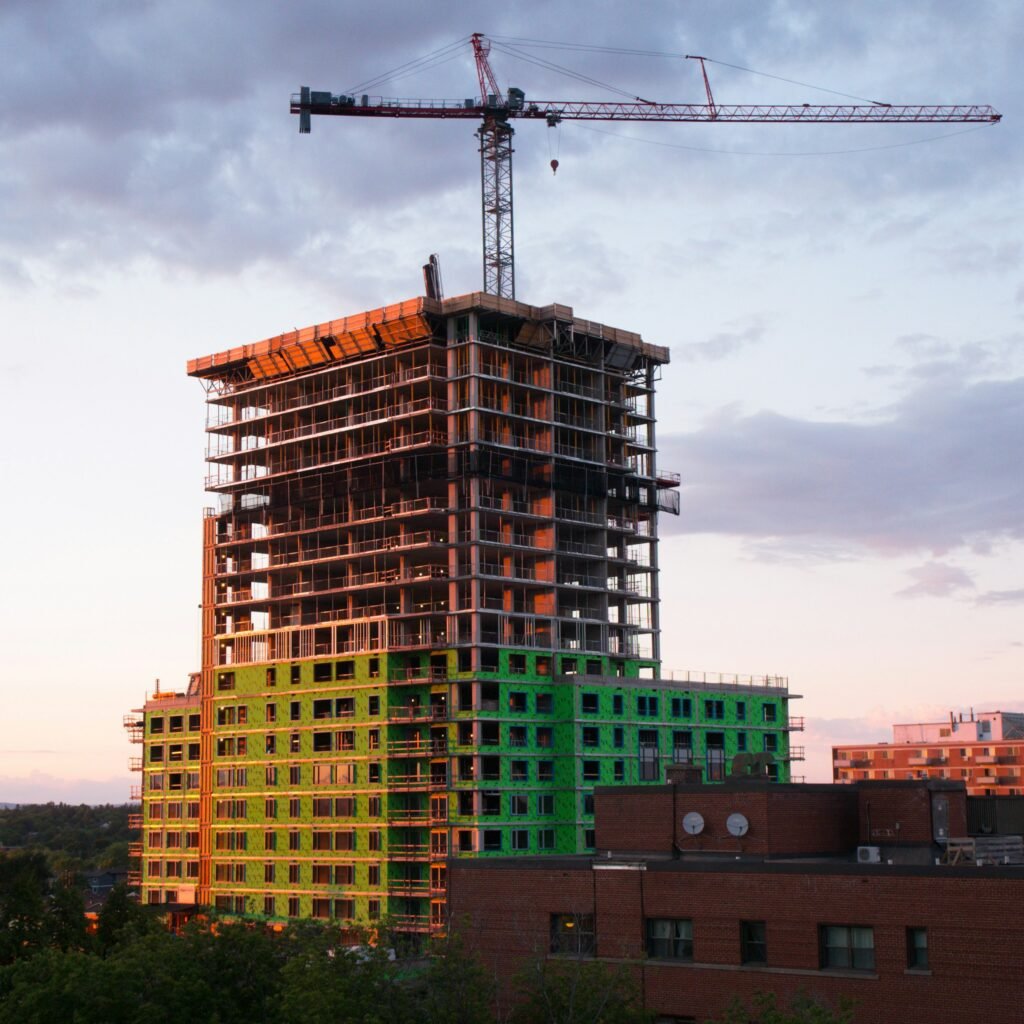
This article explains how the agency is structured, the main partnership models (public land, financing and direct build), eligibility and selection, how it fits with Canada Mortgage and Housing Corporation (CMHC) programs, and the contract terms builders should expect. It reflects primary sources available in November 2026 and is general information, not legal advice. Program details continue to evolve, so each opportunity should be checked against current documentation.
Mandate, powers and governance
Section 4 of the Act states that the corporation's purpose is to promote, support and develop the supply of affordable housing in Canada and to promote innovative and efficient building techniques in the housing construction sector. It is an agent of His Majesty (s. 6), with a board of a Chairperson and eight to ten other directors and a Chief Executive Officer appointed by the Governor in Council.
Section 20 gives the corporation broad powers. Among other things, it may:
- provide financial assistance to any person or entity, including any level of government;
- invest in entities active in affordable housing supply, including by acquiring shares or securities, making loans or giving guarantees (guarantees require the Minister of Finance's approval under s. 21);
- invest in ventures, including by acquiring and developing property, likely to benefit affordable housing supply or innovative building techniques;
- develop land and construct housing;
- acquire, hold, manage, sell or lease property and take security;
- enter into arrangements with any person or government and act as their agent in delivering programs.
At launch, the Prime Minister's announcement said that Canada Lands Company would move under Build Canada Homes, giving it access to 88 federal properties on the Canada Public Land Bank. The government's royal assent release of June 2026 notes that the Act lets the Governor in Council transfer certain federal properties, rights and responsibilities from Canada Lands Company Limited to the new corporation.
Partnership models with Build Canada Homes
The launch materials describe three main ways the agency will work with the market. The table below summarizes them and what each means for private partners.
| Model | How it works | What partners should expect |
|---|---|---|
| Public land | Federal land, including Canada Lands Company properties, is made available for housing | Long-term leases or sales with affordability conditions, competitive selection and development milestones |
| Financing and investment | Loans, guarantees, equity and other financial assistance under s. 20 | Affordability covenants, reporting, security and step-in rights |
| Direct build | The agency procures construction of homes on its sites, with an emphasis on factory-built and modular methods | Procurement processes, design-build or similar contracts, Buy Canadian preferences |
| Portfolio approvals | Large portfolios of projects approved together | Standardized designs and repeatable terms across sites |
The launch announcement identified six initial sites for about 4,000 factory-built homes in Dartmouth, Longueuil, Ottawa, Toronto, Winnipeg and Edmonton, and said the agency would prioritize Canadian lumber and other domestic materials. The June 2026 release referred to six direct-build projects advanced and more than 11,000 homes underway or nearing construction.
Builders interested in direct-build opportunities should prepare now: register with federal procurement platforms, document factory capacity and Canadian content, and assemble teams that can meet design-build or progressive delivery requirements on several sites at once.
Eligibility and selection
The Act does not set detailed eligibility rules for partners; those are set through program terms and procurement documents. The launch materials emphasize partnerships with provinces, territories, municipalities, Indigenous communities, the community housing sector and private developers, and a focus mainly on non-market housing. Partners should expect selection criteria to weigh:
- depth and duration of affordability, and the share of non-market units;
- speed of delivery and readiness, including zoning and servicing;
- use of modern methods of construction, such as factory-built, modular and mass timber;
- Canadian content and supply chain commitments;
- financial capacity and track record;
- partnerships with non-profits, Indigenous organizations and municipalities.
Because Build Canada Homes is a federal Crown corporation, procurement and funding decisions are subject to federal accountability rules under the Financial Administration Act, and partners should expect transparency obligations and audit rights.
How Build Canada Homes fits with CMHC programs
The new agency does not replace CMHC. According to the launch announcement, CMHC continues to run its existing programs, such as the Apartment Construction Loan Program and its mortgage loan insurance products. In practice, many projects will combine sources: federal land or equity from the agency, CMHC construction financing or insurance, municipal incentives and, in some cases, provincial funding. Each source brings its own affordability definitions, reporting and timing, and developers need to align them in a single capital stack. Inclusionary zoning obligations in municipalities can interact with these programs; see our insight on inclusionary zoning.
Procurement and bidding
Direct-build opportunities and many land dispositions will be awarded competitively. Federal procurement processes typically begin with a request for qualifications or expressions of interest, followed by a request for proposals to a shortlist. Bidders should expect mandatory requirements (insurance, bonding, financial capacity, safety records), rated criteria (approach, schedule, price, affordability, Canadian content), and contract terms that are largely non-negotiable once proposals are submitted. Questions and clarifications must usually be raised within fixed windows, and late or non-compliant bids are rejected.
For factory-built programs, evaluators will look closely at production capacity, quality control, transport and installation logistics, and the ability to repeat designs across sites. Consortia combining a manufacturer, a general contractor, a designer and a housing operator are common. Teaming agreements should settle exclusivity, cost sharing during the bid, allocation of risk if the bid succeeds, and what happens to work product if it fails. Disputes about procurement are usually resolved through debriefings and, in limited cases, judicial review or, where the procurement is covered by trade agreements, complaints to the Canadian International Trade Tribunal.
Structuring joint ventures with non-profit and Indigenous partners
Because the agency focuses mainly on non-market housing, many successful proposals will pair private developers or builders with non-profit housing providers, co-operatives or Indigenous organizations. These partnerships raise their own legal questions:
- the vehicle (limited partnership, co-ownership or corporation) and how it interacts with charitable or non-profit status and tax exemptions;
- allocation of development fees, construction profit and long-term operating income;
- governance, deadlock resolution and exit, including rights of first refusal over the private partner's interest;
- compliance with affordability covenants and who bears the cost of shortfalls;
- for Indigenous partners, the treatment of reserve or settlement lands and any consultation or benefit arrangements.
Clear documentation at the outset, reviewed by each partner's own advisers, makes the partnership financeable for lenders and insurers and reduces disputes when market conditions change during a long affordability period.
Risks for private partners
Public partnerships bring stable demand and patient capital but also distinctive risks. Program terms can change with government priorities and budgets; affordability covenants may constrain refinancing and exit for decades; and public scrutiny of costs and delivery can be intense. Construction risks, such as cost escalation, supply chain delays and labour shortages, are not removed by public involvement and are often allocated to the builder through fixed-price contracts. Partners should model downside scenarios, including slower lease-up of non-market units and higher operating costs, negotiate change-in-law and escalation mechanisms where possible, and ensure that security packages and guarantees are proportionate to the profit opportunity. See our insight on price escalation and delay claims.
Contract terms for builders and developers
Agreements with Build Canada Homes are likely to follow public-sector patterns adapted to housing. Key terms to review include:
- Affordability covenants: rent or price limits, income eligibility, duration, and registration on title, with remedies for breach.
- Land tenure: whether land is sold or leased, ground rent, reversion and restrictions on transfer or refinancing.
- Delivery obligations: milestones, liquidated damages, performance security and step-in rights.
- Construction contracts: design-build or progressive design-build forms, often based on standard documents with supplementary conditions; see our insight on CCDC contracts.
- Payment and liens: provincial prompt payment, holdback and adjudication rules apply to construction on provincial land and may apply to federal projects depending on ownership and the provincial statute.
- Buy Canadian and reporting: domestic content commitments, audit rights and data sharing under s. 20(j).
Illustration: a modular builder partners with a non-profit to bid for a direct-build site. The agency leases the land for 99 years, provides construction financing, and requires 60% of units at below-market rents for the term. The builder signs a design-build contract with fixed unit prices, delivery milestones and performance security, while the non-profit signs an operating agreement with affordability covenants. These terms are hypothetical; actual programs will set their own.
What to watch next
Several features of the new regime are still taking shape. Partners should monitor the following developments over the coming months:
- Transfers from Canada Lands Company. The Act allows the Governor in Council to transfer federal properties, rights and responsibilities to the corporation, and some financial provisions relating to Canada Lands Company were still shown as not in force in the November 2026 consolidation. The timing of transfers will determine which sites come to market, in which cities, and on what terms.
- Corporate plan and program guidelines. As a federal Crown corporation, the agency operates within the Financial Administration Act framework, and its corporate plan, annual reports and published guidelines will set priorities and eligibility in more detail.
- Standard documents. Repeatable land lease, financing and construction templates will emerge as portfolio approvals and direct-build procurements proceed. Early participants can influence how workable these forms are.
- Provincial and municipal alignment. Zoning, approvals, development charges and provincial housing programs will continue to affect project viability, regardless of federal support.
How TRW & Co helps with Build Canada Homes partnerships
We advise developers, builders, non-profits, investors and lenders on partnering with Build Canada Homes: reviewing program and procurement documents, structuring joint ventures with non-profit and Indigenous partners, negotiating land leases, financing and affordability agreements, and aligning construction contracts with provincial prompt payment, holdback and lien regimes across the provinces where projects are located. We work with licensed counsel in each province for registrations and local approvals. See our infrastructure, P3 and procurement and construction law pages, or contact us.
Frequently asked questions
What is Build Canada Homes?
A federal Crown corporation established under the Build Canada Homes Act, S.C. 2026, c. 18, to promote, support and develop the supply of affordable housing and innovative building techniques. It was launched as an agency on 14 September 2025 with an initial CAD 13 billion and became a Crown corporation when the Act came into force in 2026.
How can developers partner with Build Canada Homes?
Through access to federal public land, financial assistance and investment, and direct-build procurement of homes on agency sites. Specific opportunities are offered through program terms and procurement processes, which set eligibility, affordability and delivery requirements.
Does Build Canada Homes replace CMHC?
No. CMHC continues to run programs such as the Apartment Construction Loan Program and mortgage loan insurance. Many projects are expected to combine Build Canada Homes land or capital with CMHC financing and municipal or provincial incentives.
What construction methods does Build Canada Homes favour?
Its launch materials emphasize modern methods of construction, including factory-built, modular and mass timber homes, and a Buy Canadian approach prioritizing Canadian lumber and other domestic materials. The Act's purpose also includes promoting innovative and efficient building techniques.
What contract terms should builders expect?
Typically affordability covenants registered on title, land lease or sale terms, delivery milestones with performance security, design-build style construction contracts, domestic content commitments and reporting and audit rights. Provincial prompt payment and lien rules may also apply.
Sources
General information only, not legal advice. References to statutes, courts and authorities describe published law and practice at the date shown.
 Real Estate & Construction
Presale Contracts and Condominium Disclosure Rules
Presale contracts let developers finance projects with buyer deposits, but provincial law demands full disclosure, trust protection for deposits and cooling-off rights. A defective disclosure statement… 8 min read
 Real Estate & Construction
Ontario Construction Act: 2026 Amendments Explained
The Ontario Construction Act changed on 1 January 2026. Owners must now release holdback annually, invoices are deemed proper unless flagged within seven days, adjudication has… 8 min read
 Real Estate & Construction
Construction Adjudication: Winning a Fast-Track Dispute
Construction adjudication lets contractors, subcontractors and owners resolve payment disputes in weeks, with determinations that bind until a court or arbitrator decides otherwise. Ontario, Alberta, Saskatchewan… 8 min read