
Lundin Mining: What Counts as a Material Change
Lundin Mining is the Supreme Court's 2025 ruling on what counts as a material change. Pit wall instability and a rockslide that slowed a Chilean mine could be a change in operations, so an investor could sue for late disclosure. Issuers must now treat operational incidents with more care.

Key takeaways
- Lundin Mining Corp. v. Markowich, 2025 SCC 39, was decided 8-1 on 28 November 2025.
- 'Change in the business, operations or capital' is read broadly, across industries.
- Operational events that affect production or guidance can be material changes.
- The s. 138.8 leave test screens out weak claims; it is not a mini-trial.
- Issuers should update disclosure policies and escalation protocols for operational incidents.
What Lundin Mining decided
In Lundin Mining Corp. v. Markowich, 2025 SCC 39, decided on 28 November 2025, the Supreme Court of Canada held 8-1 that the phrase "change in the business, operations or capital" in the definition of material change in Ontario's Securities Act must be read broadly. Lundin Mining had not immediately disclosed pit wall instability and a rockslide at a mine in Chile, and an investor was granted leave to sue for failure to make timely disclosure. The ruling widens what reporting issuers must treat as a potential material change.
For public companies, boards and disclosure committees, Lundin Mining changes the practical line between a "material fact", which can wait for periodic disclosure, and a "material change", which must be disclosed immediately. It also confirms that the leave test for secondary market claims is a screening mechanism, not a mini-trial. This note covers the facts, the holding, the leave test, and what issuers should do now. It is general information, not legal advice.
The facts: pit wall instability, a rockslide and a later update
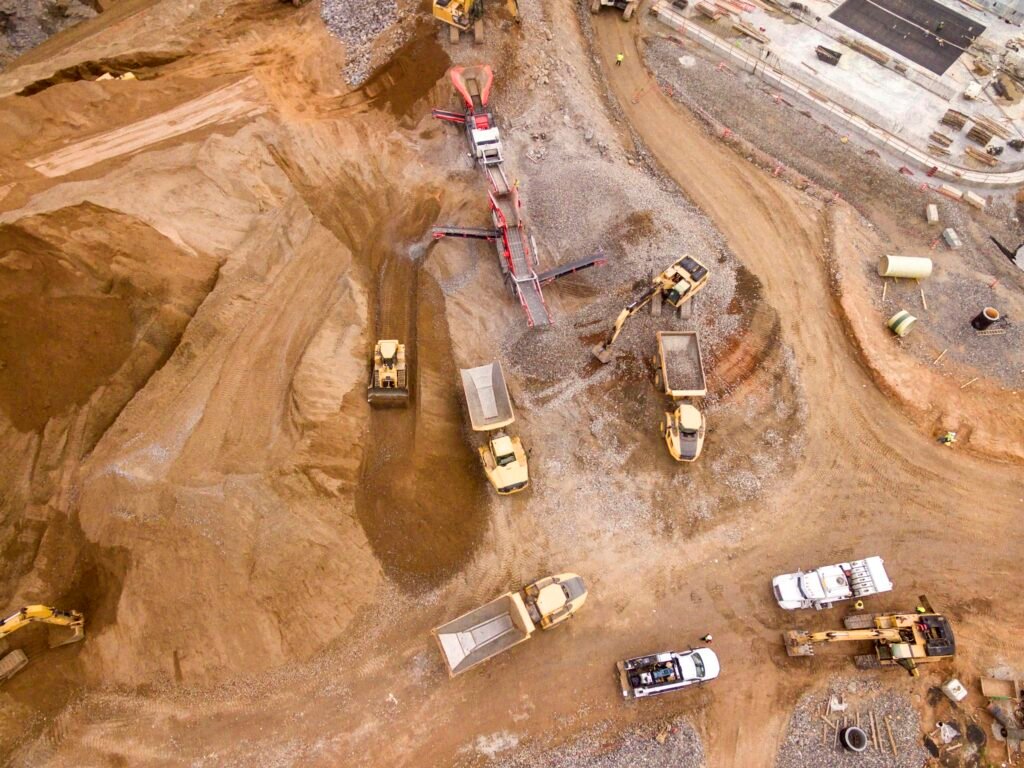
According to the Supreme Court's case summary, Lundin Mining Corporation detected pit wall instability at a mine in Chile on 25 October 2017, and a rockslide followed on 31 October 2017. The mine had to slow its operations and the company lowered its production forecast for the next year. Lundin did not issue an immediate news release; it disclosed the events on 29 November 2017 in a regularly scheduled update. The next day its share price fell 16% on the Toronto Stock Exchange.
Dov Markowich, who bought shares after the instability appeared but before the disclosure, sought leave under s. 138.8 of the Ontario Securities Act to bring a statutory secondary market claim, and certification of a class action. The motion judge refused leave, finding no reasonable possibility of showing that either event was a change requiring immediate disclosure. The Court of Appeal for Ontario granted leave and sent certification back to the Superior Court of Justice. The Supreme Court dismissed Lundin's appeal, with Justice Jamal writing for eight judges and Justice Côté dissenting.
| Date | Event |
|---|---|
| 25 October 2017 | Pit wall instability detected |
| 31 October 2017 | Rockslide; operations slowed |
| 29 November 2017 | Disclosure in a scheduled update, with lowered guidance |
| 30 November 2017 | Share price falls 16% on the TSX |
| 28 November 2025 | Supreme Court dismisses Lundin's appeal (2025 SCC 39) |
Material fact versus material change
Canadian securities law distinguishes two categories. Under s. 1(1) of the Ontario Securities Act, a material change for an issuer other than an investment fund is "a change in the business, operations or capital of the issuer" that would reasonably be expected to have a significant effect on the market price or value of its securities, or a decision to implement such a change by the board or by senior management who believe board confirmation is probable. Under s. 75, when a material change occurs, the reporting issuer must "forthwith" issue a news release and file a material change report within ten days, subject to a confidential filing exception.
A material fact, by contrast, need only be disclosed in periodic filings or a prospectus, not immediately. The distinction matters because the statutory cause of action in s. 138.3 for failure to make timely disclosure is tied to material changes. Other provinces' securities statutes use essentially the same definition, so the Supreme Court's reasoning is relevant across Canada.
| Category | Definition (Ontario) | Disclosure obligation |
|---|---|---|
| Material change | Change in business, operations or capital reasonably expected to significantly affect price or value | Immediate news release; material change report within 10 days (s. 75) |
| Material fact | Fact reasonably expected to significantly affect price or value | Periodic disclosure (MD&A, AIF, financial statements) and prospectus |
| Liability for failure | Secondary market cause of action (s. 138.3) | Leave required under s. 138.8 |
The holding in Lundin Mining: a broad reading of "change"
As summarized in the Supreme Court's Case in Brief, Justice Jamal held that the motion judge read the Act too narrowly. The statute does not define "change", "business", "operations" or "capital", and that open-ended wording allows the law to apply across very different industries. The words are not confined to a narrow category of corporate events, and an event that affects the company's operations can qualify as a change.
Applying that reading, the majority found that the instability and rockslide affected Lundin's operations and influenced its planning and production forecast. That evidence supported the investor's position that a change had occurred, so he met the leave threshold. Whether the change was material, and whether liability will be established, are matters for trial.
Justice Côté dissented and would have allowed the appeal. The split illustrates the tension at the heart of the case: the legislatures deliberately created two categories, material facts and material changes, with different timing obligations, and a broad reading of change moves more events into the category that requires immediate disclosure.
After Lundin Mining, disclosure committees should not dismiss an operational incident as a mere "fact" because it does not alter the business model. Ask whether it affects operations, production, planning or guidance, and then whether it would reasonably be expected to significantly affect the share price. If both answers are yes, treat it as a likely material change.
The leave test for secondary market claims
Under s. 138.8(1), no action may be commenced under s. 138.3 without leave, which the court grants only if it is satisfied that the action is brought in good faith and that there is a reasonable possibility that it will be resolved at trial in favour of the plaintiff. The Supreme Court confirmed that this test screens out weak and abusive claims; it is not meant to decide who would win at trial. The plaintiff must show a plausible case that the Act was breached, supported by evidence.
The practical result is that issuers face a meaningful risk that timely disclosure claims involving operational events will pass the leave stage, particularly where there was a significant share price reaction on disclosure. See our pages on securities litigation and class actions.
A two-question framework for disclosure committees
The decision suggests a simple structure for analyzing incidents in real time. The first question is whether there has been a change in the issuer's business, operations or capital. After Lundin Mining, that question will usually be answered yes for significant operational events. The second question, materiality, now carries most of the weight: would the change reasonably be expected to have a significant effect on the market price or value of the issuer's securities? That is an objective test, assessed from the perspective of the market, not management's view of the event's long-term importance.
| Type of event | Likely a "change"? | Materiality factors to weigh |
|---|---|---|
| Production outage at a major site | Yes, affects operations | Share of output, expected duration, effect on guidance and cash flow |
| Loss of a key customer or contract | Likely, affects business | Revenue share, replaceability, contractual remedies |
| Significant cyber incident | Likely, if operations or data are affected | Operational disruption, regulatory exposure, remediation cost |
| Change in commodity prices or interest rates | Traditionally treated as an external development rather than a change in the issuer | Usually addressed in periodic disclosure, unless it triggers an internal change such as a mine closure |
| Board decision to sell a division | Yes, a decision to implement a change | Size of the division, price, strategic significance |
The analysis should be recorded as it is made. In litigation, the plaintiff will compare the timing of internal knowledge with the timing of public disclosure, and the share price reaction on disclosure will be offered as evidence of materiality. A contemporaneous record showing that the committee considered the event promptly, obtained the relevant technical and financial information and reached a reasoned conclusion is the issuer's best protection, whatever the conclusion. Where the committee decides not to issue a release, it should revisit the decision as new information arrives, since an event that seems contained on day one may, within days, become a change requiring immediate disclosure, as the sequence of instability followed by a rockslide in this case illustrates.
Implications for issuers and boards
- Operational incidents. Mine failures, plant outages, cyber incidents, product recalls, loss of key permits or customers, and supply chain disruptions can all be changes in operations. The question becomes materiality, not whether the event is "the right kind" of change.
- Guidance. Where an event leads management to revise production or financial guidance, that is strong evidence that operations have changed.
- Timing. "Forthwith" means immediately. Waiting for a scheduled quarterly update is risky if the event is likely material, as the month-long gap in this case shows.
- Confidential filings. Section 75(3) allows a confidential material change report in limited circumstances, such as where disclosure would be unduly detrimental. It is not a general deferral tool, and the issuer must keep the information confidential while it relies on it.
- Insider trading and selective disclosure. Until disclosure, the information is likely undisclosed material information; trading blackouts and tipping restrictions apply. See our note on selective disclosure.
Practical steps after Lundin Mining
- Update the disclosure policy to reflect the broad meaning of change, with examples drawn from the company's own operations.
- Create an escalation protocol so that site-level incidents reach the disclosure committee within hours, not weeks.
- Document the materiality analysis contemporaneously, including market price considerations and the reasons for any decision not to issue a release.
- Coordinate with technical disclosure rules, such as NI 43-101 for mining issuers; see our note on mining disclosure rules.
- Review D&O insurance and indemnities in light of the increased litigation risk, and consider how directors' reasonable investigation defences will be supported.
Illustration (hypothetical): a TSX-listed manufacturer suffers a fire at its largest plant, halting a third of production for an expected two months. Management plans to address it in quarterly results three weeks later. Following Lundin Mining, the fire is very likely a change in operations; if it would reasonably be expected to significantly affect the share price, the company should issue a news release forthwith and file a material change report within ten days.
How TRW & Co helps
We advise reporting issuers, boards, disclosure committees and investors on continuous and timely disclosure under Canadian securities law, including material change analysis, disclosure policies, confidential filings and the management of operational incidents. We help issuers prepare for and respond to secondary market claims, working with Canadian-licensed litigation counsel, and advise on related governance and insurance issues. See our continuous disclosure compliance page and our note on timely disclosure of material changes, or contact us.
Source: Lundin Mining Corp. v. Markowich, 2025 SCC 39, full reasons.
Frequently asked questions
What is the difference between a material fact and a material change?
A material change is a change in the issuer's business, operations or capital that would reasonably be expected to significantly affect the price or value of its securities, and must be disclosed forthwith under s. 75 of the Ontario Securities Act. A material fact has the same market-impact test but need only be disclosed in periodic filings or a prospectus.
Did the Supreme Court find Lundin liable?
No. The Court decided only that the investor met the leave test under s. 138.8, meaning there is a reasonable possibility the action will succeed at trial. Whether a material change occurred and whether Lundin is liable remain to be decided, and certification of the class action was sent back to the Superior Court.
Does the decision apply outside Ontario?
The case interpreted Ontario's Securities Act, but other provinces' securities statutes use essentially the same material change definition and similar secondary market liability regimes. Courts and regulators across Canada are likely to follow the Supreme Court's interpretation.
Can an issuer delay disclosure of a material change?
Only in limited circumstances. Section 75(3) allows a confidential material change report where disclosure would be unduly detrimental to the issuer, or in certain cases involving senior management decisions awaiting board confirmation. Otherwise disclosure must be made forthwith.
What should boards do now?
Review disclosure policies and escalation procedures so operational incidents reach the disclosure committee quickly, document materiality decisions, align technical disclosure with securities obligations and review D&O insurance in light of greater secondary market litigation risk.
Sources
General information only, not legal advice. References to statutes, courts and authorities describe published law and practice at the date shown.
 Leading Court Decisions
The Sattva Decision: Contract Interpretation in Canada
The Sattva decision is the Supreme Court's leading ruling on contract interpretation. Words are read in light of the surrounding circumstances known to both parties at… 8 min read
 Leading Court Decisions
Reference re Impact Assessment Act: What the Supreme Court Held
The Reference re Impact Assessment Act held that most of Canada's federal impact assessment regime for designated projects exceeded Parliament's jurisdiction. Sections 81 to 91 survived,… 8 min read
 Leading Court Decisions
Pioneer v Godfrey: Price-Fixing Class Actions
Pioneer v Godfrey is the Supreme Court's leading price-fixing class action decision. It let umbrella purchasers sue, held that the Competition Act's two-year limitation period runs… 8 min read